10 Acrylic Press On Nails Buying Tips for Global Buyers
Buying Acrylic Press On Nails for international markets requires more than attractive colors and low prices. Global buyers must examine material quality, sizing accuracy, adhesive compatibility, packaging, and supplier consistency. A glossy nail can look excellent in a sample photo, yet feel thin, uneven, or poorly fitted in real use. Small details matter, such as clean edges, flexible tips, secure boxes, and size charts measured in millimeters.
Doug Schoon, a respected nail-industry scientist and educator, has said, “The product is not the problem; the problem is the improper use of the product.” This principle is valuable for buyers. A reliable product still needs clear application instructions, suitable adhesive guidance, and responsible safety information. Suppliers should explain the nail composition, curing or wearing requirements, and recommended storage conditions. They should also provide consistent samples before large orders.
Do not trust appearance alone.
The ten buying tips in this guide focus on practical decisions for different markets. They cover supplier verification, product testing, customization, labeling, shipping protection, and after-sales support. Buyers should compare several samples under ordinary lighting. Check whether the nails bend slightly without cracking. Test the fit across different nail shapes. Review how packaging performs in humid or cold conditions. One weakness remains: even careful testing cannot predict every customer’s preference. However, documented quality checks reduce avoidable problems and support more dependable purchasing decisions. A thoughtful buyer may accept a higher unit price when it protects brand reputation, customer comfort, and repeat sales.
Understand Acrylic Press-On Nail Types and Global Market Needs
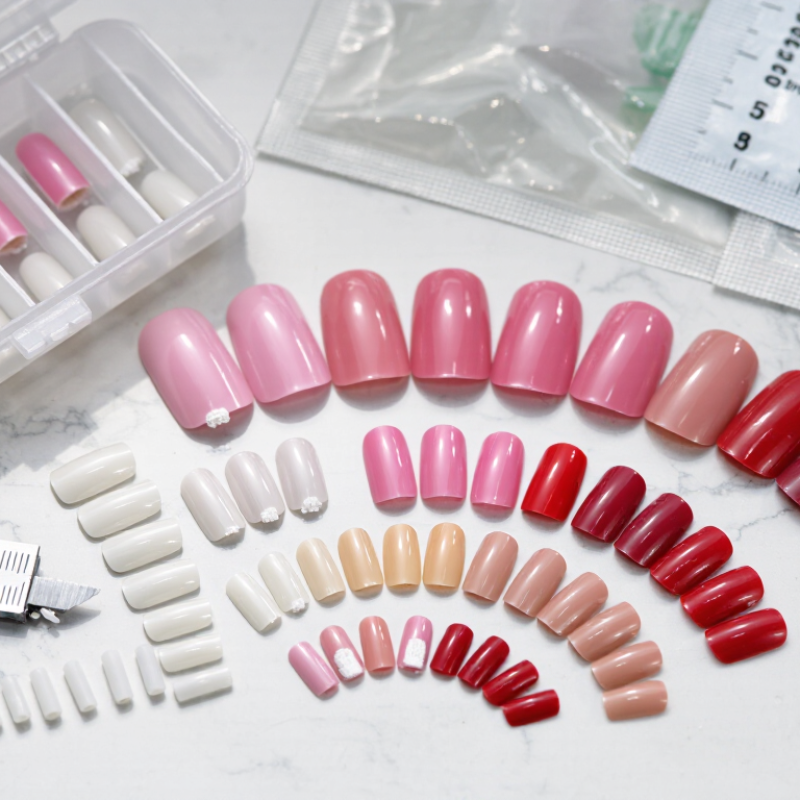
Global buyers should identify the acrylic press-on nail type before comparing prices. Products marketed as acrylic press-ons may use acrylic resin, ABS plastic, or hybrid construction. Full-cover tips support quick application, while sculpted designs may fit curved nail beds better. Choose short, medium, or long lengths according to daily work, climate, and local style preferences. Shape matters too. Square, almond, coffin, and round profiles serve different customers. A sizing chart with millimeter measurements is more reliable than “small” or “large.”
For international purchasing, inspect thickness, surface finish, and flexibility from physical samples. A good set should feel firm, not brittle, and align without painful pressure. Check whether packaging includes adhesive tabs, liquid glue, a file, and preparation instructions. These details affect retail value and customer satisfaction. Warm regions may need secure adhesion and moisture-resistant packaging, while colder markets may prefer flexible tips. Ask suppliers for material declarations, batch information, and test records where applicable. Clear labeling supports customs review and safer consumer use.
Do not judge quality from glossy photos alone. I once overlooked a narrow cuticle curve; the design looked attractive but fit poorly on wider nail beds. That mistake changed my buying checklist. I now compare ten sample sizes, measure the apex, and test removal instructions before larger orders. Global demand is not uniform. Some buyers want understated nude tones, while others seek detailed art, reusable packaging, or salon-ready presentation. Leave room for trial orders. A small defect rate can become expensive across multiple markets, especially when return costs are high.
Check Nail Quality, Shape, Size, and Design Options
10 Acrylic Press On Nails Buying Tips for Global Buyers
Global buyers should inspect acrylic press-on nail quality before comparing prices. A reliable sample should feel firm, not brittle or rubbery. Check the edges for smooth filing and consistent thickness. Hold each nail under light. Bubbles, cloudy patches, or uneven curves may suggest weak production control. I once accepted a sample with beautiful artwork, but several nails cracked during fitting. Appearance alone is not enough.
Tip 1: Confirm shape and size options with physical samples. Popular shapes include square, almond, coffin, and oval, but naming can vary between suppliers. Measure the nail width at its widest point, then compare it with your own sizing chart. Request multiple sizes, including petite and wider options. Do not trust a single chart blindly. Small differences can affect comfort and customer returns.
Tip 2: Review design quality closely. Fine lines should look sharp, and colors should remain even near the cuticle area. Ask whether finishes include glossy, matte, metallic, or raised details. Designs should match the approved sample under natural and indoor light. A sample may look perfect in photos, yet feel different in hand. Keep written specifications for shape, length, color, packaging, and acceptable defects. Also check production consistency across repeated samples, not just one attractive set.
Evaluate Materials, Sizing Systems, Packaging, and Customization
When buying acrylic press on nails globally, inspect the material before judging the appearance. Ask whether the set uses consistent acrylic layers and a stable adhesive surface. Check the thickness at the cuticle and tip. Uneven edges often signal weak quality control. The nails should feel firm, but not painfully rigid. A mild material smell may occur, yet a harsh odor deserves further investigation. Review the finish under bright light. Tiny bubbles, cloudy patches, or rough sidewalls can affect customer satisfaction. Request physical samples, not only polished photographs. A perfect sample can still mislead.
Sizing systems create another common problem. Confirm whether sizes use numbered widths, millimeters, or both. Ask for a printable sizing guide and measure several nail shapes. Include short, medium, and long options when testing demand. Packaging should protect each nail from bending, dust, and friction. Separate compartments are useful. Check whether the box survives a simple drop test. For customization, clarify colors, shapes, surface effects, logo placement, and minimum order quantities. Provide a marked artwork file with exact dimensions. Production details are sometimes misunderstood. Reconfirm them in writing. I have seen attractive prototypes fail because the final packaging used the wrong insert size. Small errors matter. Compare lead times, sample approval steps, and replacement policies before committing to a larger order.
Compare Prices, Shipping Terms, Import Rules, and After-Sales Support
When comparing acrylic press-on nails, calculate landed cost, not just unit price. Ask for sample pricing, minimum order quantity, packaging fees, and payment terms. A low quote can hide expensive freight. UNCTAD’s Review of Maritime Transport 2023 states that over 80% of global merchandise trade by volume moves by sea. Compare air, sea, and consolidated shipping options. Request a written quote with delivery time, insurance, tracking, and responsibility for damage. Check the Incoterms 2020 rule carefully. It defines cost and risk transfer, but it does not replace local import advice.
Review your country’s import rules before ordering. Confirm the correct customs classification, duty rate, product labeling, and documentation requirements. Adhesive components may require extra declarations in some markets. Ask for material specifications, size charts, curing details, batch records, and inspection photos. A physical sample remains useful. Screenshots can flatter quality. WTO’s World Trade Statistical Review 2023 recorded 2.7% merchandise trade-volume growth in 2022, but changing freight conditions still make large forecasts risky.
After-sales support deserves a measurable standard. Request a written policy for chipped nails, missing pieces, incorrect colors, and transit damage. Set a response time, evidence requirements, replacement limits, and refund method. Test communication before placing a large order. Keep invoices, approved samples, inspection records, and shipping documents together. One overlooked detail can erase the price advantage. I would also question my own assumptions: attractive packaging may impress buyers, while poor sizing creates costly returns.