China Best Lipstick Tube Supplier for Global Buyers
Choosing the China Best Lipstick Tube Supplier for Global Buyers requires more than comparing prices. Packaging protects the formula, shapes shelf appeal, and influences customer trust. A reliable supplier should offer clear material specifications, stable production, and documented quality controls.
Mei Lin, a cosmetic packaging engineer with experience in international tube development, says, “A Lip Stick Tube must protect the product before it tries to impress the customer.” Her point is practical. Buyers should inspect wall thickness, closure strength, twist performance, and surface finish. A cap that loosens during shipping can damage both products and reputation.
Strong suppliers provide prototypes before mass production. They explain minimum order quantities, mold charges, lead times, and packaging options without hiding important details. Aluminum, plastic, and recycled materials each create different costs and performance results. Color matching also deserves attention. A soft-touch coating may feel luxurious, yet it can mark easily during handling.
Details matter.
Global buyers should request factory photographs, inspection records, and pre-shipment samples. They should also confirm whether the supplier can support required labeling and market-specific packaging standards. Certifications alone are not enough. Documents must match the actual factory and production process.
No supplier is perfect. A polished sample may not represent every production batch. That uncomfortable possibility deserves attention. Buyers who use staged approvals, written specifications, and independent inspections reduce avoidable risks. The best partnership is not built on promises alone. It grows through transparent communication, repeatable quality, and realistic delivery commitments. A dependable China Lip Stick Tube supplier helps brands protect their products while creating packaging customers remember.
China’s Lipstick Tube Industry: Materials, Capacity, and Export Markets
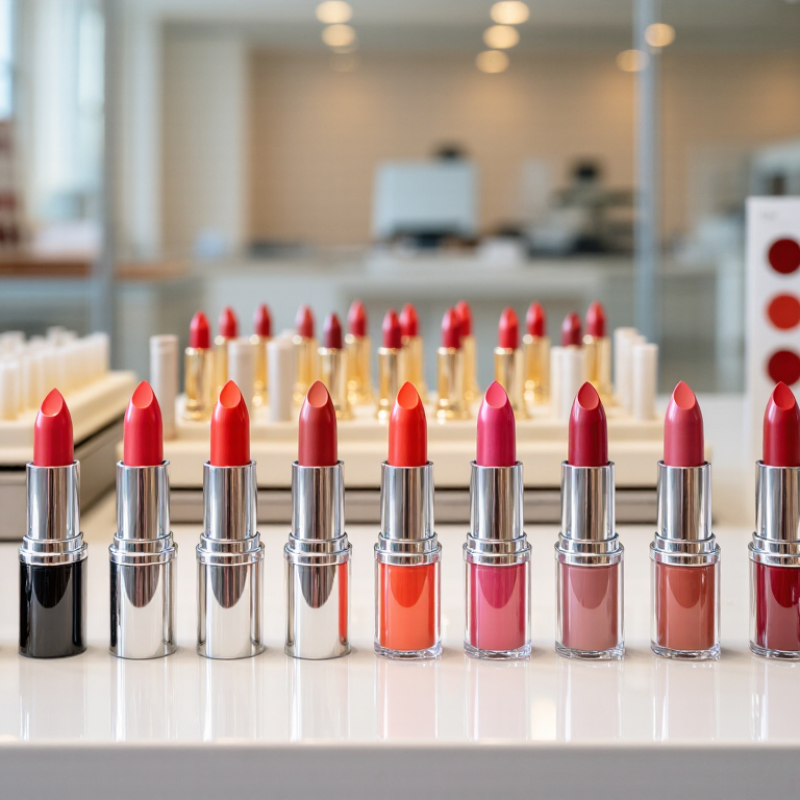
China’s lipstick tube industry is moving from basic plastic molding toward engineered, export-ready packaging. Common materials include ABS, PP, aluminum, zinc alloy, and post-consumer recycled plastic. Aluminum offers a cool, solid feel, while ABS supports complex decoration at lower weight. Material choice matters. The China National Bureau of Statistics reported cosmetics retail sales of approximately RMB 414.2 billion in 2023, supporting steady domestic demand for packaging capacity.
Factory capacity varies widely. Experienced suppliers usually operate injection molding, die casting, anodizing, spraying, and assembly lines in one production system. During practical sourcing reviews, buyers should inspect mold maintenance, color consistency, hinge strength, and closure torque. A tube that looks attractive may still loosen after repeated use. Intertek and SGS packaging testing guidance commonly emphasizes drop resistance, dimensional checks, and compatibility testing. These details affect filling efficiency and customer complaints.
China’s export reach covers Southeast Asia, Europe, North America, the Middle East, and Latin America. UN Comtrade data places cosmetic packaging within broader plastics and metal container classifications, so exact lipstick tube values are difficult to isolate. This limitation deserves attention. Market reports from Grand View Research also indicate continuing global growth in color cosmetics, increasing demand for customized components and shorter development cycles. Buyers should request material declarations, production records, and pre-shipment samples. Capacity is not everything. Reliable documentation remains uneven across factories, and that gap matters.
Supplier Evaluation Using MOQ, Lead Time, AQL 1.5, and 2.5 Inspection Levels
China Best Lipstick Tube Supplier for Global Buyers
A reliable lipstick tube supplier should be judged by evidence, not polished samples. Start with MOQ, because a low quote may hide a large production minimum. Ask whether MOQ applies per color, finish, or mold. A practical supplier explains tooling charges and stores approved reference samples.
Lead time needs a clear production calendar. Request separate dates for artwork approval, component molding, decoration, assembly, and shipment. In my supplier reviews, delays often begin with late color confirmation. Build a buffer. It feels wasteful, but missed launch windows cost more.
Quality decisions require measurable inspection rules. AQL 1.5 is stricter than AQL 2.5 and suits visible cosmetic defects. For premium finishes, buyers may use AQL 1.5 for major appearance points and AQL 2.5 for minor defects. The exact sample size depends on lot size, inspection level, and the chosen sampling standard. Do not accept “passed inspection” without records. Check torque, cap fit, base stability, coating adhesion, color consistency, and contamination under controlled lighting. Request photos and defect counts from pre-shipment inspection.
Small flaws matter.
One limitation deserves attention: AQL sampling cannot guarantee every unit is perfect. A supplier with strong records can still miss an isolated defect. Buyers should combine inspection data with pilot orders, traceable batch codes, and corrective-action reports. Some suppliers resist this detail; that resistance is useful information.
Compliance Requirements: ISO 22716, EU 1223/2009, and FDA 21 CFR
A reliable lipstick tube supplier must treat compliance as a documented process, not a printed claim. ISO 22716 guides cosmetic manufacturing, hygiene, storage, and traceability. It does not certify one tube automatically. For EU sales, Regulation (EC) 1223/2009 requires the finished cosmetic to be safe, supported by a Product Information File, and assessed by a qualified safety professional. Packaging materials should not release harmful substances into the formula. Compatibility testing matters.
In the United States, cosmetics generally do not need FDA premarket approval. However, products must not become adulterated because of their containers. Relevant 21 CFR requirements may apply to color additives, restricted ingredients, or packaging intended for specific contact uses. A capable supplier should provide material specifications, batch records, Certificates of Analysis, and evidence from migration or stability testing. Cosmetics Europe reported an €88.8 billion European market in 2023. That scale makes weak traceability expensive. I have seen attractive tubes fail during filling because of poor pump fit, odor transfer, or surface coating changes. A glossy finish is not proof of safety.
Tips: Request resin or alloy details, coating information, heavy-metal screening, and batch traceability before approval. Test the tube with the actual lipstick formula, including heat, cold, and long-term storage. Ask whether records follow ISO 22716 principles. Do not accept “FDA approved packaging” without precise legal evidence. Suppliers sometimes overstate compliance. Check every claim.
Tube Engineering Standards: 12.1 mm Bullets, Torque, and Fit Testing
China Best Lipstick Tube Supplier for Global Buyers
A 12.1 mm lipstick bullet needs more than a matching inner diameter. The tube should control wall clearance, base support, and vertical travel. In production trials, we check the bullet at several heights, not only at the rim. A practical engineering target may use 12.1 mm as the nominal diameter, with project-specific tolerances confirmed before tooling. Small errors can create drag, wobbling, or uneven product exposure. The twist mechanism must also move smoothly under controlled torque. Many projects begin around 0.15–0.30 N·m, but formula hardness and component materials can change the result.
Torque testing should measure opening, closing, and reverse movement. We record peak torque and running torque separately. A tube that feels acceptable once may fail after repeated cycles. Fit testing includes assembly force, cap engagement, bullet alignment, and leakage checks after temperature conditioning. Samples should be tested before and after transport simulation. I have seen attractive prototypes fail because the cap touched the bullet edge. The drawing looked correct. The assembly was not.
Tips: Request dimensional reports for the bullet cup, elevator, and shell. Test at least three production batches. Use actual filled bullets, not only plastic gauges. Define acceptance limits in writing. It is also wise to review torque data after 100 cycles, because early results can be misleading. Suppliers should retain samples, document revisions, and explain any tolerance they cannot consistently hold. Some specifications may need adjustment after testing. That is normal engineering, not a hidden defect.
Sustainable Packaging: PCR Content, Aluminum Tubes, and Recyclability Metrics
China Best Lipstick Tube Supplier for Global Buyers
Sustainable packaging now requires measurable evidence, not attractive claims. PCR content gives post-consumer plastic a second life, but quality can vary by collection stream. The OECD’s Global Plastics Outlook reported that only 9% of plastic waste was successfully recycled in 2019. This makes verified sourcing essential. A reliable lipstick tube supplier should provide PCR percentage, material declarations, batch records, and third-party testing. ISO 14021 can guide credible recycled-content claims.
Aluminum tubes offer another practical route.
The International Aluminium Institute reports that aluminium recycling uses about 95% less energy than primary production. However, a tube is not always easily recyclable. Inner coatings, caps, magnets, and mixed-material components may disrupt sorting. Recyclability depends on local facilities, not only the material name.
Suppliers should report component weight, separability, recycled aluminium content, and destination-market recycling access. These details help global buyers compare real performance.
Tip: Ask for a packaging bill of materials and a recyclability assessment. Request PCR test results, not only a percentage printed on a brochure. Check whether the cap can be removed by hand. It sounds minor. It matters.
A practical scorecard can track PCR content, recycled aluminium share, total component count, and recyclability by market.
The Ellen MacArthur Foundation’s Global Commitment reporting shows that packaging progress remains uneven across regions. Therefore, a “recyclable” claim may need qualification. Suppliers should admit these limits and improve designs through pilot testing. Perfect circularity is not available yet. Reliable measurement is the better starting point.