China’s office peripherals market includes a wide range of optical mouse manufacturers and suppliers. For buyers, a polished product photo is only a starting point. The real test comes during a full workday: Does the mouse track steadily across a desk mat? Can its buttons withstand repeated clicks? Does its shape remain comfortable after hours of use?
In this Optical Mouse Office overview, we examine how to assess Chinese suppliers beyond price and catalog claims. Useful checks include sensor performance, switch durability, connection options, production consistency, sample quality, and clear communication. Ask for specifications, test samples on common office surfaces, and confirm that packaging and delivery details match the purchase order. Small differences matter. A noisy scroll wheel can distract a shared workspace. A poorly placed side button can frustrate daily use. Supplier claims should be verified, not simply repeated.
Ergonomics specialist Dr. Alan Hedge is widely known for research on workplace design, but a verified quotation from him about office optical mice is not available here. Rather than invent one, this guide follows a practical principle: evaluate the device in the conditions where people will use it. That means testing comfort, cursor control, and build quality with real users. The assessment is not perfect; individual hands and work habits differ. Still, careful sampling and transparent supplier checks can help buyers make more reliable decisions.
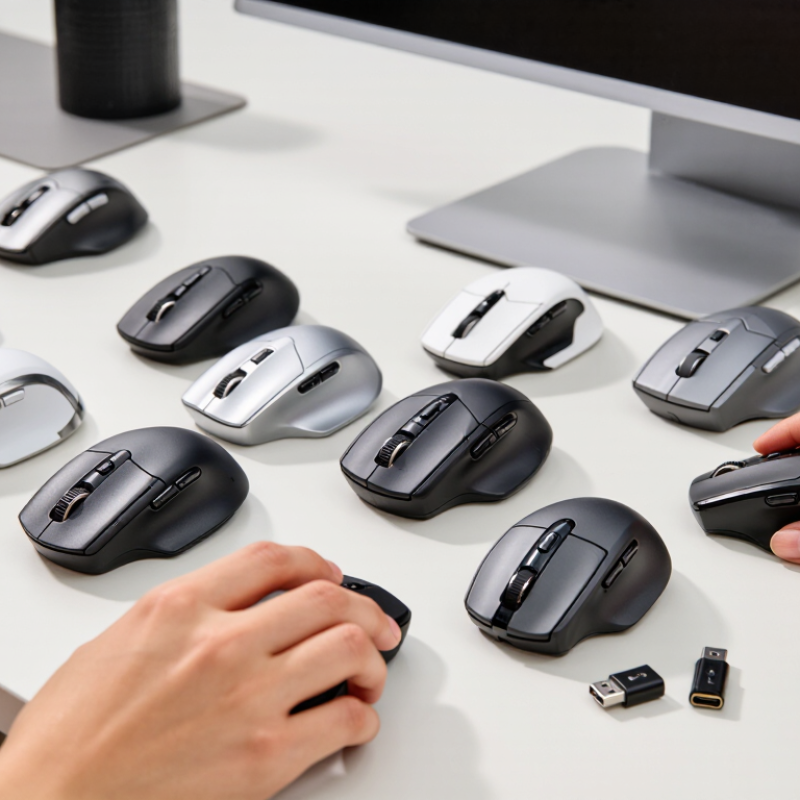
China’s office optical mouse industry is part of a wider electronics manufacturing network. Its supply chain commonly links optical sensors, control chips, printed circuit boards, switches, cables, and molded plastic shells.
The Ministry of Industry and Information Technology (MIIT) reported that China’s electronic information manufacturing sector generated 15.1 trillion yuan in operating revenue in 2023. Revenue rose 3.4% year on year. This figure covers a broad sector, not mouse production alone. That distinction matters.
For office models, buyers often compare cursor stability, click noise, cable or wireless reliability, and comfort during long desk sessions. A smooth sensor should track across a typical mouse pad without sudden jumps. Small details count: a loose scroll wheel or stiff button can become irritating after hours of use. Suppliers may offer different shell shapes, surface finishes, and packaging for bulk orders. China’s established electronics supply base can support coordinated component sourcing and assembly, though supplier capabilities vary. Low prices alone reveal little about quality. Ask for sample testing and clear inspection criteria. That is not a perfect shortcut, but it helps expose weaknesses before a large order.
Office optical mice convert surface movement into cursor motion by illuminating the desk and comparing successive images. A digital signal processor estimates direction and distance. Sensor performance depends on surface texture, lighting, and tracking design, not just the advertised DPI.
IDC’s Worldwide Quarterly Personal Computing Device Tracker recorded 259.5 million PC shipments worldwide in 2023. That figure shows the scale of workstation use, but it does not measure mouse sales. For office users, a stable sensor matters when moving between a matte desk, a mouse pad, and a glossy meeting-room table. A high DPI figure can look impressive, yet feel jumpy during spreadsheet work. Spec sheets can mislead.
Polling rate also affects responsiveness. At 125 Hz, a mouse reports movement every eight milliseconds; at 1,000 Hz, roughly every millisecond. Higher rates may add little value for routine document work, while reliable wireless links and sensible power management matter more. Check whether the shape supports a relaxed wrist and whether buttons remain easy to reach after hours of use. Small details matter. Manufacturers should test tracking on varied office surfaces and publish clear, repeatable measurement methods; too many specifications still lack useful context.
China’s office optical mouse supply base includes several distinct business types, rather than one uniform factory category. Dedicated manufacturers mold plastic shells, assemble circuit boards, and test cursor tracking on smooth and textured desk surfaces. Some specialize in OEM production, following buyer drawings and packaging requirements. Others provide ODM services, adapting shell shape, button layout, or sensor settings. Details matter.
A second group consists of trading companies and export-oriented suppliers. They may source from several factories and combine mice with keyboards or other office peripherals. This can simplify mixed orders, though buyers should ask who handles quality checks and warranty claims. Small specialist workshops may offer flexible sampling, but their capacity and documentation can vary. Ask for a sample. Check its tracking response, wheel noise, cable length, and whether the stated DPI matches the supplied model.
Component integrators occupy another niche, sourcing sensors, switches, and cables while managing final assembly. When comparing suppliers, request a clear specification sheet, inspection criteria, lead time, and carton details. A low quote can omit testing or after-sales support. Specification sheets sometimes leave small gaps, so confirm changes in writing before approving a production sample. Even simple office mice need consistent tracking. That part is easy to overlook.
| Supplier Type | Typical Products | Common Capabilities | Customization Options | Suitable Buyers | Points to Verify |
|---|---|---|---|---|---|
| OEM/ODM peripheral manufacturers | Wired and wireless office optical mice, including standard two-button and scroll-wheel models | Product assembly, model selection, packaging, and production based on buyer specifications; ODM suppliers may also offer existing designs | Logo and packaging, color, cable length, receiver configuration, and selected materials or components | Importers, distributors, retailers, and private-label brands seeking finished products | Confirm sample approval, minimum order quantity, production lead time, component specifications, and applicable compliance documents |
| Wireless mouse specialists | 2.4 GHz USB-receiver mice and Bluetooth office mice | Integration of wireless connectivity, receiver pairing, battery compartments, and power-management features | Wireless mode, receiver type, battery format, sleep behavior, housing design, and retail packaging | Buyers sourcing cable-free products for home, office, or mobile use | Check operating-system compatibility, wireless performance, receiver inclusion, battery requirements, and relevant radio approvals for the destination market |
| Ergonomic and comfort-focused manufacturers | Vertical, contoured, compact, and other comfort-oriented optical mice | Housing design and assembly for different hand positions, sizes, and usage preferences | Shape, size, surface finish, button layout, color, and packaging | Office-equipment sellers and buyers serving users who prioritize comfort or specific form factors | Evaluate physical samples for fit, button reach, scrolling feel, surface quality, and consistency between samples and production units |
| Component-integrated mouse manufacturers | Finished office mice assembled from sourced or in-house components | Coordination of optical sensor, control electronics, switches, wheel, cable or wireless module, and plastic housing | Selected sensor or switch specifications, button configuration, scroll-wheel design, and connection type | Buyers with defined technical requirements or multiple product configurations | Request a component specification sheet and confirm that approved components will be used consistently in mass production |
| Electronic component and mouse-module suppliers | Optical sensing modules, control boards, switches, cables, receivers, or related assemblies | Supply of parts or subassemblies rather than necessarily providing a complete retail-ready mouse | Module configuration, connector or interface details, and selected electrical or mechanical specifications | Mouse assemblers, product developers, and buyers managing their own final assembly | Verify interface compatibility, drawings, test criteria, traceability, and whether the supplier supports finished-product assembly |
| Export-oriented trading and sourcing suppliers | Office optical mice sourced from one or more manufacturing facilities | Product sourcing, order coordination, packaging support, and export documentation; production is typically performed by manufacturing partners | Product selection, consolidated orders, branding coordination, and packaging arrangements | Small or mid-sized buyers seeking sourcing support or a broader product range | Clarify whether the supplier is the manufacturer or an intermediary, identify the production site, and confirm responsibility for inspection and after-sales claims |
| Buyer note: Supplier categories describe common business models, not a verified ranking of individual companies. Before placing an order, compare samples, written specifications, quality-control procedures, delivery terms, and destination-market compliance requirements. | |||||
Choosing a reliable office optical mouse supplier in China requires more than comparing catalog prices. Ask for a detailed specification sheet covering sensor resolution, polling rate, button life, cable length, and operating-system compatibility. Request samples from the production model, not just a showroom unit. Test them on different desk surfaces and check cursor movement, scroll-wheel feel, and click consistency. Small details matter. A sample can still differ from a full batch, so ask how the supplier controls changes between orders.
Review quality records, inspection steps, and the process for handling defective units. Ask whether checks happen during assembly or only before shipment. Request clear photos or a live video of the packaging and final inspection area. Verify production capacity and typical lead times against your order size, then ask how delays or component substitutions are communicated. A useful supplier answers specific questions with documents and measurable details, rather than broad assurances. Pay attention to communication, too: unclear replies about warranty terms or replacement procedures can create avoidable trouble later. No checklist catches everything. Start with a modest trial order and record any issues, even minor ones, before agreeing on larger volumes.
China’s office optical mouse makers should treat quality control as a measurable process, not a final visual check. Inspect sensor tracking on matte and glossy surfaces, test scroll-wheel steps, and check button response across production samples. Record results by batch. Small details matter. A cable that survives a desk test may still fail after repeated bending, so strain-relief checks deserve attention. Buyers can request documented test methods, calibration records, and clear defect thresholds before approving a production run.
Export readiness also depends on steady logistics and accurate product records. The World Bank’s 2023 Logistics Performance Index gave China an overall score of 3.7 out of 5; the index evaluates areas such as customs, infrastructure, and shipment tracking. This is useful context, not proof of any individual factory’s reliability. Exporters should match carton labels, packing lists, and commercial invoices, while confirming the destination market’s applicable safety and radio requirements. Paperwork matters. A buyer should verify that samples, mass-production units, and declared specifications align. That comparison is easy to overlook, and even experienced teams can miss a small change in sensor settings or packaging. Good suppliers make those changes visible before shipment.