Why Choose Jewelry Display Cases for Retail Stores?

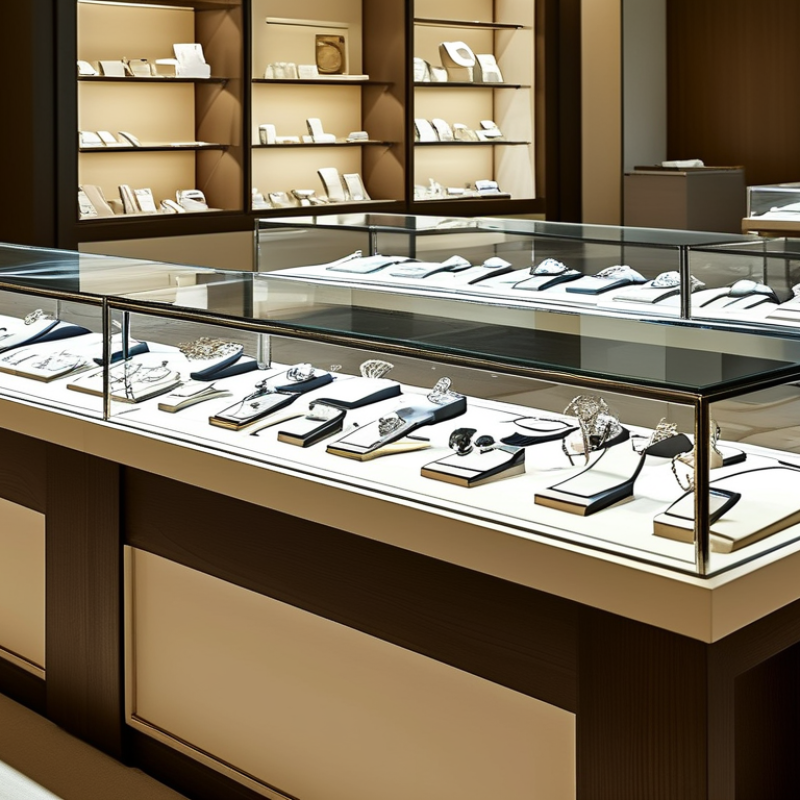
For jewelry retailers, presentation is part of the selling experience. jewelry display cases place rings, necklaces, and watches at eye level while protecting them from dust, accidental contact, and unnecessary handling. Clear glass allows customers to study delicate details, such as a stone’s cut or a chain’s texture, without opening the case immediately. That small distance can make the product feel more valuable and carefully selected.

A well-designed case also supports consistent store operations. Lockable doors, adjustable lighting, and organized trays help staff manage busy periods with fewer mistakes. Tempered glass and strong hinges can improve durability, while soft interior lining helps reduce scratches on polished surfaces. In practice, lighting deserves special attention. Excessive brightness may create glare, and weak lighting can make fine jewelry look flat. The best arrangement depends on the store’s layout, customer traffic, and product range.

They are not magic.

A beautiful case cannot replace honest pricing, knowledgeable service, or thoughtful merchandising. It may also require regular cleaning, hardware checks, and occasional layout changes. Some retailers choose expensive designs too quickly and later discover that staff cannot access products efficiently. That is a useful warning. Before purchasing, measure the sales floor, review security needs, and test how customers move around the display. Reliable jewelry display cases should balance appearance, protection, accessibility, and long-term maintenance. When those details work together, the case becomes more than furniture. It becomes a practical tool for trust, product education, and confident purchasing.
Why Choose Jewelry Display Cases for Retail Stores?

Jewelry Display Cases Defined: Presentation, Protection, and Storage

Why Choose Jewelry Display Cases for Retail Stores?

Jewelry Display Cases Defined: Presentation, Protection, and Storage

A jewelry display case does three jobs at once: presentation, protection, and storage. Clear tempered glass lets customers inspect stones, settings, and finishes without unnecessary handling. Adjustable trays keep rings upright and necklaces separated. That small detail prevents tangled chains and misplaced pieces during busy hours. Warm, balanced lighting can reveal polish without creating harsh reflections. Poor lighting still weakens a beautiful display.

Protection needs practical design. Lockable doors, stable frames, and limited access reduce casual handling and support staff control. The 2023 National Retail Security Survey reported average retail shrink of 1.6% of sales in the previous fiscal year. The report covers retail broadly, not jewelry alone, but its warning remains relevant: display security affects operating risk. A case cannot replace inventory counts, cameras, or trained employees. It is one control, not a complete solution.

Storage should also support daily selling. Pull-out drawers can hold presentation cloths, spare tags, and smaller collections. The best layout allows staff to retrieve items quickly while customers continue browsing. In store planning work, I have seen overly crowded cases make valuable pieces look ordinary. More products do not always create more value. A reflective surface may look impressive, yet fingerprints and dust quickly undermine trust. Regular cleaning and honest layout reviews are necessary. Retailers should measure engagement, handling time, and sales before changing every case. That evidence is often more useful than visual instinct alone.

Market Context: The Global Jewelry Market Reached $353.26B in 2023 (GVR)

Why Choose Jewelry Display Cases for Retail Stores?

The global jewelry market reached $353.26 billion in 2023, according to Grand View Research (GVR). This scale creates intense competition for attention inside physical stores. A display case turns that competition into a controlled visual experience. Clear glass, adjustable lighting, and precise spacing help customers inspect metal finishes, stone settings, and small design details.

The World Gold Council’s Gold Demand Trends 2023 reported global jewelry demand above 2,000 tonnes. That demand includes products with very different price points and buying motivations. Retail cases therefore need flexibility. Lockable drawers can protect compact high-value pieces, while open sightlines make everyday jewelry easier to compare.

A 4000K light can reveal detail, but excessive brightness may flatten color and create reflections.

A case is not magic.

Retail teams should test viewing angles from standing and seated positions. GVR’s market data shows opportunity, but opportunity does not guarantee conversion. Poor spacing can make a $1,000 piece look ordinary. Oversized fixtures may also reduce floor circulation. Clean glass, accurate color rendering, and regularly changed arrangements often matter more than decorative excess. These practical details support trust when customers are already comparing quality, price, and craftsmanship.

Security Case: NRF Recorded 1.6% Retail Shrink in FY2022

Retail jewelry display cases do more than present rings and watches. They create a controlled point of access, which matters when small, high-value items sit within easy reach. The National Retail Federation’s 2023 National Retail Security Survey recorded average retail shrink of 1.57% in fiscal 2022, commonly rounded to 1.6%. For a store with $1 million in annual sales, that equals about $15,700 in losses.

A well-designed security case can reduce casual removal and improve staff awareness. Laminated glass, reliable locks, anchored frames, and organized trays support practical loss-prevention routines. Clear sightlines also help employees notice unusual handling without creating an uncomfortable shopping experience. The Loss Prevention Research Council has repeatedly emphasized layered controls, including environmental design, employee engagement, and inventory visibility. A display case is one layer, not a complete solution.

Small details matter. Keep premium pieces near staffed areas. Record transfers between the case and fitting counter. Reconcile high-value inventory at set intervals. Train employees to open cases deliberately, not automatically. Still, a locked case can slow genuine shoppers. That trade-off is easy to underestimate. Excessive barriers may reduce customer interaction and make the store feel unwelcoming. Retailers should test case height, lighting, access procedures, and staff positioning before making a final investment. Data can guide the decision, but daily observation often reveals what the spreadsheet misses.

Lighting Choice: ENERGY STAR LEDs Use 75% Less Energy and Last 25× Longer

Why Choose Jewelry Display Cases for Retail Stores?

Lighting can decide whether a necklace looks refined or flat behind glass. ENERGY STAR guidance states that certified LED bulbs use at least 75% less energy than incandescent lighting and last up to 25 times longer. For retailers, this matters when display cases remain illuminated for ten or more hours daily.

A focused LED strip can highlight gemstones without flooding the entire sales floor. Less radiant heat also helps reduce temperature stress inside enclosed cases. The U.S. Department of Energy notes that LED performance depends on efficient drivers, thermal management, and suitable controls. Poorly designed fixtures may still create glare, uneven brightness, or distracting reflections on glass.

Color quality deserves careful testing. The Illuminating Engineering Society recommends evaluating color rendering for merchandise where visual accuracy affects purchasing decisions. In practice, staff should inspect silver, gold, diamonds, and colored stones under the chosen light before installation. Small differences matter.

Not every LED lasts 25 times longer.

Dust, heat, frequent switching, and low-quality power components can shorten service life. A retail manager should check replacement access, beam angle, flicker performance, and measured energy use. The U.S. Energy Information Administration reports that lighting remains a meaningful part of commercial electricity demand, so modest savings can accumulate across dozens of cases. The better choice is not simply the brightest lamp. It is stable, efficient light that keeps jewelry visible without making the case feel harsh.

Store Planning: ADA Requires 36-Inch Routes and 15–48-Inch Reach Ranges

Why Choose Jewelry Display Cases for Retail Stores?

Store Planning: ADA Requires 36-Inch Routes and 15–48-Inch Reach Ranges

Jewelry display cases can support accessible retail planning when their depth, height, and placement work together. The 2010 ADA Standards require accessible routes to provide at least 36 inches of clear width. They also define reach ranges from 15 to 48 inches for many forward-access conditions. A case placed too close to a wall can quietly reduce turning space. That mistake is easy to miss during visual merchandising.

The Centers for Disease Control and Prevention reports that about one in four U.S. adults has a disability. This figure makes accessibility a practical retail concern, not a decorative feature. Choose cases with clear sightlines, stable glass panels, and service areas reachable from a seated position. Keep frequently requested pieces between 15 and 48 inches above the finished floor. ADA requirements do not automatically make every display shelf accessible, so local review still matters. That detail deserves attention.

Tips: Measure the finished aisle, not the empty floor plan. Leave a continuous 36-inch route beside each case. Test the display with a wheelchair, walker, and one-handed reach. Record the measurements before installation. Recheck after adding stools, signage, or queue rails. Small changes can create large barriers.

Why Choose Jewelry Display Cases for Retail Stores? - Store Planning: ADA Requires 36-Inch Routes and 15–48-Inch Reach Ranges

Planning Dimension ADA Reference Minimum / Maximum Application to Jewelry Display Cases Design Consideration
Accessible route clear width 2010 ADA Standards, Section 403.5.1 36 in minimum Maintain a continuous accessible route between entrances, display areas, checkout points, and fitting or consultation spaces. Avoid placing protruding case corners, stools, promotional stands, or movable merchandise within the route.
Wheelchair turning space 2010 ADA Standards, Section 304 60 in diameter minimum
or T-shaped equivalent
Provides maneuvering space near corners, case ends, consultation tables, and checkout areas. Use accessible end bays or open turning pockets so customers can approach and leave the case comfortably.
Forward reach range 2010 ADA Standards, Section 308.2 15 in minimum
48 in maximum
Merchandise, controls, brochures, and interactive displays intended for customer use should be positioned within this range when the approach is unobstructed. Place commonly handled items and digital controls within the reachable zone rather than at the back or top of a deep case.
Side reach range 2010 ADA Standards, Section 308.3 15 in minimum
48 in maximum
Supports accessible access to displays, self-service information, payment devices, and product-viewing features approached from the side. Keep side-accessible features clear of deep shelves, glass dividers, and other obstructions.
Accessible sales or service counter 2010 ADA Standards, Section 904.4 36 in minimum length
36 in maximum height
An accessible portion of a jewelry sales or service counter can support product discussion, payment, packaging, and customer assistance. Provide at least one compliant transaction location where customers do not need to reach over a tall display case.
Clear floor or ground space 2010 ADA Standards, Section 305 30 × 48 in minimum Allows a customer using a wheelchair or mobility device to approach selected displays, payment equipment, or service features. Keep the required space free from display plinths, boxes, wastebaskets, and temporary stock.
Protruding objects along circulation paths 2010 ADA Standards, Section 307 4 in maximum projection
for objects between 27 and 80 in above floor
Applies to wall-mounted signs, lighting elements, shelving, hardware, and case components near accessible routes. Select flush-mounted or recessed case details to reduce collision hazards and improve visibility.
Display visibility and service access Inclusive retail planning practice; verify with applicable building codes Plan for seated and standing users Glass display cases allow merchandise to remain visible while staff control access, provide security, and assist customers at an accessible location. Combine secure glazing, adjustable lighting, clear sightlines, and an accessible consultation position without narrowing the route.

Note: Dimensions are based on the 2010 ADA Standards for Accessible Design. Apply the requirements to the relevant elements of the store and verify current federal, state, and local accessibility requirements before construction or renovation.