Who Are the Top Fitness Apparel Manufacturers in China?

Choosing a reliable Fitness Apparel Manufacturer in China takes more than comparing prices or browsing polished product photos. China’s apparel supply chain includes factories with different strengths, from seamless knitting and sports bras to custom teamwear and performance leggings. A supplier’s capabilities can vary widely, even within the same product category. Details matter.

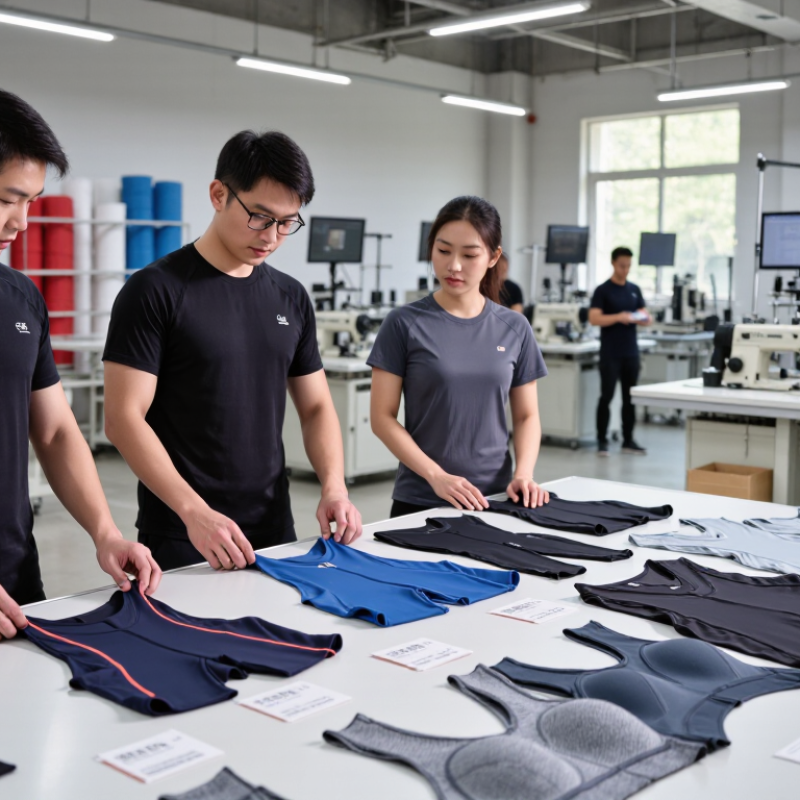
This guide explains how to assess manufacturers using practical, verifiable signals: relevant product experience, fabric sourcing, sampling quality, production capacity, and communication. Ask for close-up stitching photos, fabric specifications, and a sample that can be checked during movement, not just on a hanger. A clear size chart and consistent grading across sizes are useful signs, too. They are not guarantees.

The manufacturers discussed should be viewed as potential partners, not as a universal ranking. The best fit depends on your product design, order volume, target price, and expected timeline. Request current references and confirm which processes happen in-house versus through subcontractors. Fit is personal. Even a promising sample may need revisions after wear testing, and that is worth acknowledging. By comparing suppliers against the same criteria, buyers can make more informed decisions and avoid relying on sales claims alone.
Who Are the Top Fitness Apparel Manufacturers in China?

China’s Fitness Apparel Manufacturing Industry and Its Key Regions

China’s fitness-apparel industry is a network of regional supply chains, not one factory belt. The China National Textile and Apparel Council reported about US$293.6 billion in textile and apparel exports in 2023. That figure shows the sector’s scale, but it does not isolate activewear. Not interchangeable.

Guangdong, including Dongguan and Guangzhou, offers dense garment-making and trim-sourcing networks. Fujian’s Quanzhou and Jinjiang are known for knitwear and sportswear production. Zhejiang combines fabric sourcing and garment manufacturing, while Jiangsu adds textile mills and apparel capacity. These clusters can shorten sourcing routes, but capabilities vary by factory. Still, a regional label is only a starting point; directories can make clusters seem more uniform than they are.

Tips: Ask factories for recent samples, fabric test results, and production-line photos. Confirm whether printing, bonding, and sewing happen in-house or through subcontractors. Small details matter: a mesh panel’s stretch recovery can change the fit after washing.


China’s Fitness Apparel Manufacturing Industry and Its Key Regions

China’s textile and apparel export value provides context for the industry’s manufacturing scale.

Guangdong, Zhejiang, Jiangsu, and Fujian are established textile and apparel manufacturing regions, with clusters around cities such as Guangzhou, Dongguan, Ningbo, Nantong, and Quanzhou. The chart shows national textile and apparel exports—not fitness-apparel-only figures or a regional manufacturer ranking. Source: China Customs and China National Textile and Apparel Council; values rounded to the nearest US$0.1 billion.

Criteria for Identifying Leading Fitness Apparel Manufacturers

A leading fitness apparel manufacturer should prove more than a low sample price. Grand View Research estimated the global activewear market at about USD 406.8 billion in 2024, with continued growth projected through 2030. That demand makes material expertise important. Textile Exchange’s Materials Market Report 2024 estimated that polyester represented 57% of global fiber production in 2023. Ask factories to identify fiber content, fabric weight, stretch recovery, and moisture-management test methods. Specific answers matter.

Production capability should be checked against the garment, not a sales presentation. Request wash-test results, seam-strength records, and measurements from repeated production batches. For leggings, inspect waistband recovery and opacity under movement. For training tops, check stitching around shoulder seams and whether fabric dries consistently. Samples are not factories. Review recent production records, quality-control steps, and how defects are recorded and corrected.

Also assess development speed, minimum order quantities, material traceability, and communication during revisions. A useful supplier can explain where fabric is sourced and how changes affect cost or lead time. Ask for evidence, such as test reports and production schedules, rather than accepting broad assurances. A polished sample can still mislead; one weakness in this checklist is that factory performance may vary by order, so verify again during production.

Profiles of Notable Fitness Apparel Manufacturers in China

Profiles of notable fitness apparel manufacturers in China often reveal different strengths rather than one universal leader. Some specialize in performance leggings and use four-way stretch fabrics, flatlock seams, and reinforced gussets. Others focus on teamwear or lightweight training tops, where color consistency and dependable repeat orders matter more than complex shaping. A factory’s sample room can tell you a lot. Look for clear stitching, smooth seam allowances, and fabric that recovers after stretching. Details matter.

More experienced suppliers may support pattern development, fabric sourcing, grading, and production checks under one roof. Still, a polished sample does not guarantee consistent bulk production. Ask how fabric lots are tracked and how defects are recorded. Request a sample in your target fabric, then compare it with a small production run. That extra step takes time. It can prevent an expensive surprise.

Tips: Share a tech pack with measurements, fabric weight, color references, and seam details. Confirm minimum order quantities, lead times, and inspection steps in writing. If answers stay vague, pause and ask again. One practical question is whether the supplier can show records from a recent production run, with private customer details removed. A little skepticism helps.

Common Products, Materials, and Manufacturing Capabilities

Chinese fitness apparel manufacturers commonly produce leggings, sports bras, running shorts, training shirts, and lightweight jackets. Product details shape the work: leggings need supportive waistbands, while breathable shirts often use mesh panels. Details matter. Seams should lie flat, and stretch fabrics should recover after repeated movement. A polished sample can still hide production variation; that risk deserves attention.

Materials often include polyester or nylon blends with elastane, plus mesh and, in some ranges, recycled polyester. Each behaves differently during cutting and sewing. A supplier’s capabilities may cover pattern development, fabric sourcing, cutting, stitching, printing, and packing, but the exact scope varies. Ask who checks measurements and fabric consistency. Request a sample with the intended material, then compare its waistband recovery, seam finish, and color after washing. Fit can drift. Clear specifications help, though they cannot replace production checks. Some details are easy to overlook: pocket depth, lining transparency, and how a garment feels when damp. These practical checks offer a more useful picture of manufacturing capability than a broad product list.

Factors to Consider When Selecting a Chinese Manufacturer

Choosing a Chinese fitness apparel manufacturer starts with the product, not the factory’s broadest claims. A supplier experienced in compression leggings may not handle lightweight running tops equally well. Ask about similar garments, fabric weights, seam construction, and previous production runs. Specific answers are more useful than a general promise of quality.

Request samples made with the proposed fabric and trims. Check stretch recovery, opacity, stitching, and how the garment feels after washing. Small details matter. A polished sample can still hide production risks, so ask how the factory checks bulk orders. Useful evidence includes inspection records, measurement tolerances, and a clear process for handling defects. If possible, compare a pre-production sample with finished units.

Capacity and communication deserve equal attention. Confirm monthly output, lead times, minimum order quantities, and how changes are documented. Ask who will answer technical questions and how often production updates arrive. Clear communication can prevent costly misunderstandings, especially when sizing or colors change. Do not rely on vague assurances; put specifications and approval steps in writing. Price matters, but an unusually low quote may omit testing, packaging, or other costs. I would still leave room for doubt: no checklist can guarantee a smooth partnership, and small trial orders can reveal problems that sales calls do not.

Who Are the Top Fitness Apparel Manufacturers in China? - Factors to Consider When Selecting a Chinese Manufacturer

Use this checklist to compare potential suppliers. The right choice depends on product requirements, order volume, quality expectations, and compliance needs; the criteria below are not a company ranking.

Evaluation Dimension What to Assess Evidence to Request Practical Selection Check
Product and technical expertise Experience with the specific garments you need, such as leggings, sports bras, compression tops, training shorts, or seamless products. Relevant product samples, technical specifications, construction details, and examples of comparable production work. Confirm the supplier can explain fabric choice, stitching, support, fit, and construction trade-offs for your product.
Fabric and trim sourcing Ability to source and consistently reproduce the required fiber content, weight, stretch, recovery, hand feel, color, and performance features. Fabric composition and test reports, color swatches, trim specifications, supplier traceability information, and sample yardage where appropriate. Approve materials before bulk production and document acceptable tolerances for color, weight, and performance.
Sampling and fit development How the supplier manages patterns, size grading, fit revisions, pre-production samples, and approval milestones. A sample-development schedule, measurement charts, revision records, and a final pre-production sample for approval. Check samples on the intended size range and confirm that approved specifications are recorded before production starts.
Quality management Inspection procedures for incoming materials, in-line production, finished garments, measurements, workmanship, and packing. Quality-control procedures, inspection reports, defect classifications, corrective-action records, and any relevant quality-system certificates. Agree on inspection stages, measurement tolerances, defect handling, and acceptance criteria in writing.
Production capacity and lead time Available production lines, seasonal workload, order capacity, and the time required for sampling, material procurement, manufacturing, and packing. A production plan showing key milestones, capacity allocation, material lead times, and contingency arrangements. Ask for a schedule based on your actual styles, quantities, and material requirements rather than relying on a general lead-time estimate.
Minimum order quantities and cost clarity Minimums by style, color, and fabric; sample charges; setup costs; payment terms; and any costs for changes or special packaging. A written quotation with quantities, unit prices, included services, exclusions, payment terms, and quote validity. Compare quotations on the same specifications and order quantities; clarify how material minimums affect smaller runs.
Testing and product compliance Testing needs for the destination market and product, which may include fiber content, colorfastness, seam strength, restricted substances, or labeling requirements. Recent test reports for relevant materials or products, the testing laboratory’s details, and a clear plan for any required additional testing. Verify that reports apply to the actual fabric, color, and product being ordered; confirm applicable legal requirements independently.
Certifications and claims Whether any claimed management-system, chemical-safety, or recycled-material certification is relevant to the specific facility and product. Current certificates, certificate scope and expiry dates, issuing-body details, and transaction-level documentation where required. Check certificates with the issuing organization and confirm that their scope covers the site, process, or material involved.
Communication and project management Responsiveness, clarity of technical communication, decision-making contacts, and the process for managing changes or production issues. A named project contact, written meeting notes, a change-control process, and regular production updates. Evaluate communication during sampling and quotation; record approvals and specification changes in writing.
Supply-chain transparency Visibility into subcontracting, material origins, production locations, and controls for labor and workplace conditions. Facility details, subcontractor disclosure, audit information where available, and written policies or corrective-action records. Confirm where each production step will take place and obtain approval before any subcontracting is used.
Packaging, labeling, and shipping Ability to meet packaging, labeling, carton-marking, documentation, and shipping requirements for the destination. Packaging specifications, label proofs, carton details, shipping terms, and a list of export documents the supplier will provide. Approve label and packaging samples before bulk packing and assign responsibility for each shipping document.