How to Choose the Best RV Toy Hauler in 2026?

Choosing the best rv toy hauler in 2026 requires more than comparing floor plans and glossy specifications. A practical decision begins with your actual cargo, tow vehicle, travel habits, and storage needs. Will you carry two motorcycles, a compact golf cart, or only bicycles and camping equipment? Measure each item before visiting a dealer. Then compare garage length, ramp capacity, payload, tongue weight, and axle ratings. Numbers matter more than attractive interiors.

This guide examines the features experienced RV owners and industry professionals typically inspect. You will learn how to evaluate towing stability, braking systems, fuel storage, freshwater capacity, insulation, ventilation, and sleeping arrangements. We also consider updated safety technology, solar systems, battery capacity, and connectivity for longer trips. A careful inspection should include roof seals, ramp hinges, cabinet fasteners, tire dates, and underbody wiring. Small defects can become expensive during remote travel.

No checklist is perfect. Your priorities may change after one crowded campsite or a difficult mountain climb. I have seen buyers focus on garage size, then regret limited living space. Others choose luxury features and overlook payload limits. This article encourages a balanced review using manufacturer data, independent inspections, verified owner feedback, and a realistic towing test. The best rv toy hauler is not necessarily the largest or newest model. It is the one that safely supports your equipment, passengers, budget, and travel plans without creating avoidable stress.

How to Choose the Best RV Toy Hauler in 2026?

Define Your Toy Hauler Needs, Travel Style, and Vehicle Requirements

Choosing the best RV toy hauler in 2026 starts with your actual travel habits, not its floor plan. Decide what you carry: dirt bikes, bicycles, kayaks, tools, or camping furniture. Measure each item, including its width, height, and tie-down position. Small errors become expensive problems.

Your travel style matters just as much. Weekend trips may favor a compact garage and easy campsite access. Longer journeys need stronger storage, comfortable sleeping space, ventilation, and a practical bathroom. Consider rough forest roads, crowded parks, or mostly paved highways. A large trailer can feel luxurious, but narrow turns may quickly become stressful. I once underestimated garage clearance by several inches. That mistake changed how I check layouts now.

Match the trailer to your tow vehicle carefully. Check maximum towing capacity, payload, hitch rating, axle limits, and brake requirements in the vehicle manual. Do not rely only on a sales label or an optimistic online calculator. Add passengers, fuel, tools, water, spare parts, and every toy to the loaded weight. Leave a sensible margin. A trailer that works empty may become unstable when fully packed. Measure the hitch height and confirm the vehicle can control the trailer on downhill roads. Before buying, request verified weights and inspect the ramp, latches, flooring, tires, and tie-down anchors. Some features look impressive but add weight you may rarely use.

Compare Floor Plans, Cargo Capacity, and Garage Features

Choosing the best RV toy hauler in 2026 starts with matching the floor plan to your real travel habits.

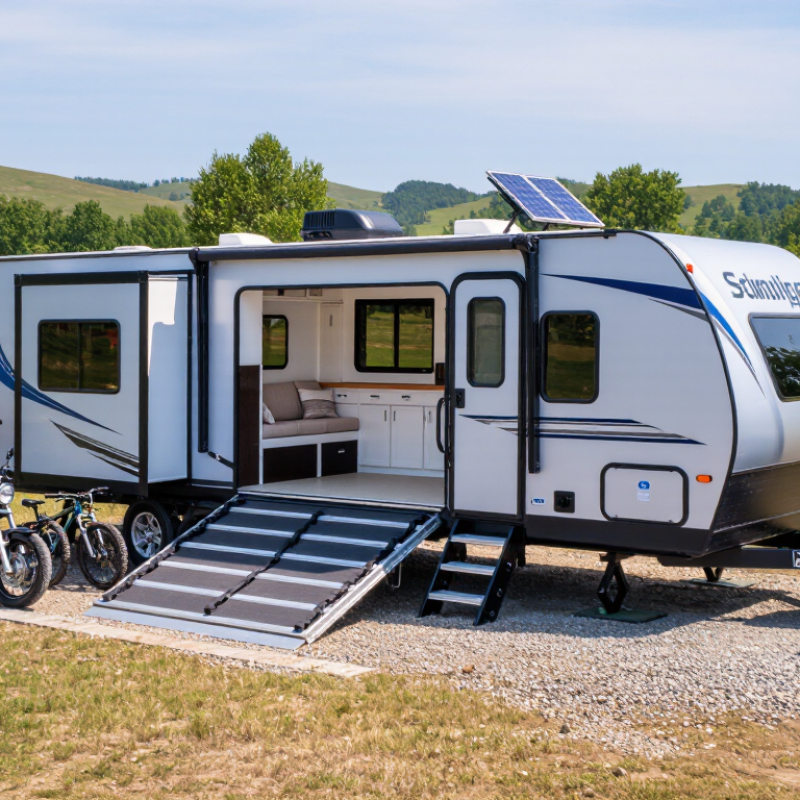
A rear garage may look impressive, but extra length can make campsite access difficult. Measure your motorcycle, bicycles, or utility gear before comparing layouts. Leave clearance for handlebars, mirrors, and loading angles. Small errors matter.

A 10-foot garage may suit compact equipment, while a 14-foot space offers more flexibility. Check the ramp width, ramp capacity, tie-down locations, and door height.

Strong tie-downs should connect to the frame, not only thin flooring. I would also inspect garage ventilation, lighting, and washable surfaces during a dealer walkthrough. These details become obvious after a muddy weekend.

Cargo capacity requires careful reading.

Do not confuse garage capacity with total vehicle payload. Verify the gross vehicle weight rating, unloaded vehicle weight, hitch limit, and axle ratings in the manufacturer’s specifications.

Add passengers, water, fuel, tools, and recreational equipment to your estimate. A nearly full tank can change the calculation. Weighing the loaded RV at a certified scale is more reliable than guessing.

I once underestimated storage bins and outdoor chairs; the mistake reduced my safety margin. A practical floor plan may sacrifice a sofa or bathroom space, but it can provide safer loading and better weight distribution. Check that beds, tables, and cabinets remain usable when the garage is occupied. Test everything.

Evaluate Towing Compatibility, Chassis Strength, and Driving Safety

How to Choose the Best RV Toy Hauler in 2026?

Towing compatibility begins with measured weights, not brochure promises. Check the tow vehicle’s GVWR, GCWR, rear-axle rating, and receiver capacity. Then weigh the loaded toy hauler, including fuel, water, tools, and motorcycles. Cargo can shift tongue weight dramatically. Keep tongue weight near 10–15% for many conventional trailers, unless the manufacturer specifies otherwise. SAE J2807 testing principles also stress controlled acceleration, braking, and grade performance. A vehicle that “can tow” may still feel unstable on a wet descent.

Chassis strength deserves closer inspection. Compare frame design, axle ratings, suspension travel, tire load capacity, and brake size. A toy hauler’s rear ramp creates a longer load path and higher structural stress. The RV Industry Association’s 2024 ownership research counted roughly 11 million U.S. RV-owning households. That scale makes standardized checks more important, not less. I once trusted a generous payload figure and ignored rear-axle loading. That was a weak assumption. Drive height, cargo placement, and passengers can consume capacity quickly. Use certified public scales when possible. One reading is useful, but repeated readings are better.

Tips: Test the rig with a full tank and real cargo. Set the brake controller before traffic. Check tire pressure when cold. Practice reversing slowly in an empty lot. Allow extra stopping distance, especially during crosswinds. A professional inspection is worth considering when frame welds, tires, or brakes look uncertain.

Assess Living Comfort, Utilities, Storage, and Seasonal Usability

How to Choose the Best RV Toy Hauler in 2026?

Assess Living Comfort, Utilities, Storage, and Seasonal Usability

Living comfort should be tested beyond a quick showroom visit. Sit on the sofa, stand inside the bathroom, and check ceiling clearance. Comfort matters. A practical floor plan separates sleeping areas from wet gear and engine equipment. I prefer walkways that remain usable when the garage carries bicycles or camping tools. Measure everything. A narrow kitchen may look attractive but feel frustrating after several days.

Utilities reveal how confidently the toy hauler supports real travel. Check freshwater capacity, waste-tank sizes, battery access, and generator ventilation. Ask how easily filters, fuses, and valves can be reached. Poor access becomes expensive during a cold evening. Heating should reach the bedroom, bathroom, and garage, not just the main lounge. Solar readiness is useful, but it cannot replace realistic power planning.

Storage needs change with each season. Look for sealed compartments, adjustable shelves, and tie-down points that do not reduce living space. Wet-weather trips demand a place for muddy boots and drying clothing. Summer travel needs shade, ventilation, and reliable cooling. Winter use is harder. Insulated tanks and protected plumbing reduce risk, yet they do not remove maintenance duties. I once underestimated condensation, and damp bedding exposed that mistake quickly. Seasonal usability is never automatic.

Verify Build Quality, Ownership Costs, Warranty, and Dealer Support

Choosing the best RV toy hauler in 2026 requires more than comparing floor plans and attractive photos. Build quality appears in small details. Inspect welds, roof seams, cabinet hinges, ramp cables, and the garage floor. Open every compartment and check for uneven gaps, water stains, or soft flooring. Ask whether the frame, suspension, and loading ramp suit your actual motorcycles, tools, or equipment. Do not trust the printed capacity alone. Confirm payload, tongue weight, and axle ratings with reliable documentation.

A low purchase price can hide expensive ownership costs. Estimate insurance, registration, storage, tire replacement, generator service, and winterization. Add fuel expenses for regular towing. Ask how easily technicians can reach plumbing, wiring, and appliances. Examine the warranty before signing anything. Check coverage periods, structural exclusions, labor charges, transfer rules, and required maintenance records. Vague promises are not protection. Get every important answer in writing.

Dealer support can determine whether a minor defect becomes a short appointment or a month-long inconvenience. Ask about parts availability, technician training, mobile repairs, and average service scheduling times. Speak with local owners when possible, not only sales staff. A responsive dealer should explain problems clearly, even when the news is inconvenient. No checklist is perfect. Buyers can still overlook road noise, awkward storage, or a difficult ramp angle. Revisit the inspection after a test tow, when practical details become harder to ignore.

How to Choose the Best RV Toy Hauler in 2026? - Verify Build Quality, Ownership Costs, Warranty, and Dealer Support

Evaluation Category Compact Travel Toy Hauler Mid-Size Fifth-Wheel Toy Hauler Heavy-Duty Fifth-Wheel Toy Hauler Luxury Class Toy Hauler What to Verify Before Purchase
Typical Length 20–30 ft 30–38 ft 38–45 ft 40–46 ft Confirm storage length, turning clearance, campsite limits, and garage-door clearance.
Typical Dry Weight 5,500–9,000 lb 12,000–17,000 lb 16,000–22,000 lb 20,000–26,000 lb Use the actual shipping weight and cargo carrying capacity listed on the unit, not an estimate.
Usable Garage Length 7–12 ft 10–14 ft 12–16 ft 13–18 ft Measure usable floor length, ramp width, interior height, tie-down spacing, and axle load capacity.
Recommended Cargo Capacity 1,500–3,000 lb 2,500–4,500 lb 3,500–5,500 lb 4,000–6,000 lb Include motorcycles, fuel, water, batteries, tools, spare parts, and personal cargo in the calculation.
Frame and Chassis Checks Inspect welded joints and suspension mounts. Check frame alignment, axle ratings, and pin-box or hitch reinforcement. Check heavy-duty suspension, brakes, axles, and structural reinforcement. Require documented load ratings and a professional underbody inspection. Look for cracks, corrosion, uneven tire wear, loose fasteners, poor welds, and water-damaged framing.
Exterior Construction Lightweight laminated or composite wall construction is common. Laminated sidewalls and reinforced cargo-area walls are common. Heavier wall, roof, and floor systems with additional reinforcement. Higher-grade finishes and added insulation are typically available. Inspect roof seams, slide-out seals, baggage doors, window seals, and caulking for gaps or soft spots.
Electrical System 12-volt system with basic converter and limited battery capacity. Larger battery bank and optional solar or inverter systems. Higher-capacity electrical distribution for multiple appliances and garage equipment. Advanced monitoring, larger inverter capacity, and expanded solar options may be available. Test every outlet, generator connection, battery monitor, inverter, solar controller, and circuit breaker.
Heating and Insulation Basic seasonal insulation; better suited to moderate climates. Improved insulation and heated utility areas may be available. Better cold-weather equipment and enclosed underbelly systems are more common. Higher insulation levels and multi-zone climate control may be included. Check the insulation package, furnace output, tank heating, ducting, and four-season operating rating.
Estimated Purchase Price, 2026 Approximately $35,000–$85,000 Approximately $75,000–$150,000 Approximately $120,000–$220,000 Approximately $180,000–$350,000+ Compare the written out-the-door price, freight, preparation fees, taxes, accessories, and financing charges.
Annual Maintenance Budget About $800–$2,000 About $1,200–$3,000 About $1,800–$4,500 About $2,500–$6,000+ Budget for tires, wheel bearings, roof care, sealant, batteries, appliances, brakes, and slide-out service.
Tire Replacement Cycle Often 3–6 years, depending on age, storage, load, and exposure. Often 3–6 years, depending on operating conditions. Often 3–6 years, with higher replacement cost because of larger load ratings. Often 3–6 years; premium or specialty sizes can cost more. Check tire age by the DOT date code, load range, inflation pressure, and spare-tire availability.
Typical Fuel Economy Impact Lower towing mass generally reduces fuel demand. Moderate fuel demand; towing vehicle capability is important. Higher fuel demand because of weight, height, and frontal area. Highest fuel demand is common because of size and equipment. Estimate fuel cost using the complete loaded combination, terrain, speed, and expected annual mileage.
Insurance and Registration Usually the lowest of the four categories. Moderate costs based on value, location, and coverage. Higher premiums and registration fees may apply because of value and weight. Highest replacement-value and contents-coverage requirements are common. Obtain an insurance quote before signing and confirm coverage for stored vehicles and garage contents.
Factory Warranty Pattern Limited structural and component coverage is commonly offered. Limited base coverage plus separate warranties for appliances and chassis components. Coverage may be divided among structure, appliances, axles, suspension, and installed equipment. Additional coverage options may be available, but exclusions can be extensive. Read start dates, deductibles, exclusions, maintenance requirements, transfer rules, and claim procedures.
Warranty Claim Practicality Fewer systems can mean simpler diagnosis and shorter repair times. Repair coordination is moderately complex. More systems may require several specialized suppliers. Complex electronics and luxury components can increase approval time. Ask for the average authorization time, parts-order process, mobile-service policy, and escalation contact.
Dealer Service Capacity Often easier for standard service bays to accommodate. Requires a service department equipped for larger units. May require heavy-duty lifts, tall bays, and specialized technicians. Needs technicians trained for advanced electrical and hydraulic systems. Confirm bay dimensions, technician certifications, appointment backlog, and after-hours emergency procedures.
Parts Availability Common service parts are generally easier to source. Most routine parts are available through RV and trailer suppliers. Specialized suspension, hydraulic, and electrical parts may take longer. Proprietary controls and premium fixtures may have longer lead times. Ask whether replacement parts remain available and whether standard alternatives are approved.
Best Use Case Small recreational vehicles, weekend trips, and lighter-duty tow vehicles. Frequent trips with moderate-sized motorcycles, ATVs, or recreational equipment. Heavy equipment, extended travel, and high cargo requirements. Long stays, maximum amenities, and large garage capacity. Match the floor plan to actual cargo, travel frequency, tow-vehicle limits, and storage conditions.
Suggested Purchase Score Best for lower entry and ownership cost Best overall balance for many users Best for maximum payload and durability Best for amenities and long-term comfort Choose the highest score only after an independent inspection, verified weight calculation, written warranty review, and confirmed service support.
Data note: Price, weight, cargo capacity, warranty terms, insurance, and maintenance costs vary by floor plan, options, location, usage, and regulations. The ranges above are indicative 2026 planning figures for comparison only. Always verify the unit-specific compliance label, tow-vehicle ratings, purchase contract, warranty documents, and dealer service commitments before purchase.