7 Tips to Choose the Best Toy Hauler Campers?

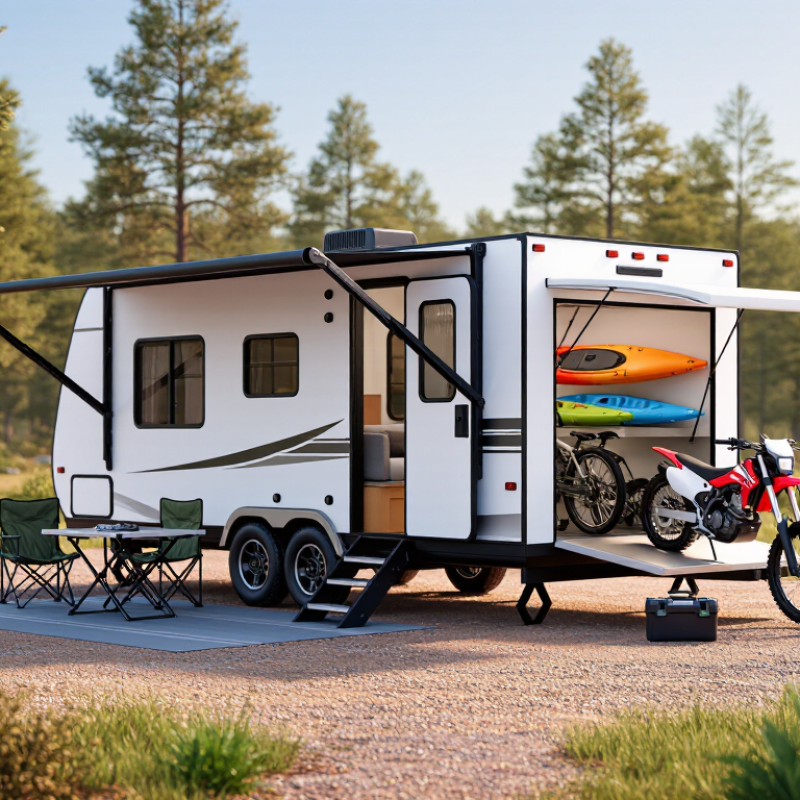
Choosing the right toy hauler campers can change an ordinary weekend into a practical, comfortable adventure. These vehicles combine living space with a rear garage, creating a flexible setup for motorcycles, bicycles, kayaks, tools, or outdoor equipment. However, the largest model is rarely the best choice. A spacious garage may reduce sleeping space, increase fuel use, and make narrow campsites difficult to navigate.

RV educator Mark Polk offers a useful reminder: “The right RV is the one that fits your needs, not someone else’s.” That idea guides this introduction to seven practical buying tips. The decision should begin with your actual equipment, not attractive photographs or impressive floor plans. Measure every item. Include loading ramps, storage boxes, and room for movement. A garage that looks generous on paper can feel cramped beside a fuel-free motorcycle or two muddy bicycles.

Experienced owners also inspect payload capacity, hitch limits, suspension, insulation, ventilation, and water storage. These details affect safety and comfort more than decorative cabinets. Check the ramp angle carefully. A steep ramp may become frustrating after rain. Test the bathroom, beds, kitchen, and seating areas before making a purchase. Small flaws matter.

There is no perfect toy hauler campers model. That is worth admitting. Your priorities may change after one trip. Still, careful comparison can prevent expensive regret. The following seven tips explain how to match capacity, layout, towing needs, construction quality, and long-term ownership costs with your real camping habits.
7 Tips to Choose the Best Toy Hauler Campers?

Define Your Toy Load Using GVWR, CCC, and Verified Weigh-Scale Data

Choosing the best toy hauler starts with defining your actual toy load. A brochure’s dry weight is only a starting point. It may exclude water, propane, batteries, options, tools, and riding equipment. Measure your motorcycle, utility vehicle, fuel containers, helmets, ramps, and spare parts. Small items become heavy together.

GVWR is the maximum permitted weight of the fully loaded trailer. CCC shows how much cargo the trailer can carry, but its calculation can vary by specification. Subtract the trailer’s loaded contents from its GVWR, including toys and supplies. Do not treat CCC as a target. Leave a practical margin. A full water tank near the rear can also change handling and axle loads.

Use a verified public scale before a long trip. Weigh the tow vehicle and trailer connected, then weigh each axle group when possible. Record the combined weight, trailer axle weight, and hitch or pin load. Compare every number with the vehicle, trailer, axle, tire, and hitch ratings. I once underestimated tools and spare parts by nearly 200 pounds in a planning exercise. That mistake was uncomfortable, but useful. Reweigh after adding fuel, fresh water, or a second toy. Load heavy items low, secure them firmly, and keep weight balanced around the axles. The scale is more trustworthy than memory.

7 Tips to Choose the Best Toy Hauler Campers? - Define Your Toy Load Using GVWR, CCC, and Verified Weigh-Scale Data

A practical comparison framework using realistic trailer weights, cargo calculations, axle limits, and certified scale results.

Tip Decision Dimension What to Check Illustrative Data How to Use the Result
1 Start with GVWR, not brochure length Confirm the trailer's Gross Vehicle Weight Rating (GVWR), which is the maximum permitted loaded trailer weight, including cargo, fluids, occupants, and installed equipment. GVWR: 12,000 lb / 5,443 kg
Published unloaded vehicle weight: 8,650 lb / 3,924 kg
Treat GVWR as a hard upper limit. A longer toy hauler is not automatically better if its weight rating exceeds the tow vehicle's rated capacity.
2 Calculate usable CCC conservatively Cargo Carrying Capacity (CCC) is generally calculated as GVWR minus unloaded vehicle weight. Actual usable capacity decreases when water, propane, batteries, passengers, and dealer-installed options are added. Basic capacity: 12,000 − 8,650 = 3,350 lb / 1,519 kg
Fresh water: 80 gal ≈ 667 lb / 303 kg
Two propane cylinders: ≈80 lb / 36 kg
Battery and equipment: ≈65 lb / 29 kg
Before loading toys, the listed capacity could already be reduced to about 2,538 lb / 1,151 kg. Use the actual scale weight whenever available.
3 Weigh every toy and accessory Do not estimate toy weight from engine size or model class. Include fuel, ramps, tie-downs, tools, spare parts, helmets, and other garage cargo. Two off-road motorcycles: 290 lb each = 580 lb
Portable generator: 110 lb
Fuel carried for recreation equipment: 30 lb
Ramps and tie-down equipment: 70 lb
Tools, helmets, and spare parts: 160 lb
Total toy-related load: 950 lb / 431 kg
Add the heaviest realistic combination, not only the equipment used on a typical weekend. A 10% to 15% reserve is preferable for changing gear and trip supplies.
4 Check tongue weight and tow-vehicle payload Trailer tongue weight transfers load to the tow vehicle. Verify the hitch rating, rear-axle rating, tire ratings, and the tow vehicle's available payload with passengers and cargo included. Loaded trailer estimate: 10,980 lb / 4,980 kg
Measured tongue weight: 1,560 lb / 707 kg
Tongue-weight percentage: 14.2%
The 1,560 lb tongue load must fit within the tow vehicle's remaining payload after passengers, tools, hitch hardware, and in-cab cargo are counted.
5 Compare axle and tire ratings The lowest rating among the GVWR, axle ratings, wheels, tires, coupler, and hitch components limits the safe operating load. Two trailer axles: 6,000 lb each = 12,000 lb combined
Four tires rated at: 3,195 lb each = 12,780 lb combined
Trailer GVWR: 12,000 lb
In this example, the trailer GVWR is the limiting value. Higher tire capacity does not increase the legally permitted GVWR.
6 Use a verified weigh-scale ticket Weigh the complete travel combination in its normal camping configuration. Record the tow-vehicle front axle, rear axle, trailer axle group, and total combined weight. Front axle: 4,820 lb / 2,186 kg
Rear axle: 6,940 lb / 3,148 kg
Trailer axle group: 9,420 lb / 4,273 kg
Combined scale weight: 21,180 lb / 9,607 kg
Separate tongue reading: 1,560 lb / 707 kg
Scale data is more reliable than catalog estimates because it includes your actual toys, fluids, passengers, and equipment. Reweigh after major changes.
7 Maintain a measurable weight reserve Calculate remaining capacity after the trailer is fully loaded. Also check the tow vehicle's Gross Vehicle Weight Rating (GVWR), rear-axle rating, tire ratings, and maximum combination rating. Trailer GVWR: 12,000 lb
Verified loaded trailer weight: 10,980 lb
Remaining trailer capacity: 1,020 lb / 463 kg
Reserve percentage: 8.5%
The combination is below the trailer GVWR in this example, but the reserve is modest. If the remaining capacity is regularly used, choose a higher-rated configuration or reduce the cargo load.
Key formulas: Trailer CCC = GVWR − unloaded vehicle weight. Remaining capacity = GVWR − verified loaded trailer weight. Tongue-weight percentage = tongue weight ÷ loaded trailer weight × 100. Actual ratings and scale readings should always take priority over estimates.

Match Loaded Trailer Weight With the Tow Vehicle’s Certified Ratings

A toy hauler can look manageable on a dealer’s lot, yet its real weight changes quickly. Water, fuel, tools, motorcycles, batteries, and personal gear all count. The 2023 RV Industry Association Statistical Annual Report recorded 313,174 wholesale RV shipments, showing how many buyers face this decision. More choices also create more room for mistakes.

Read the trailer’s certification label, not only its advertised dry weight. Calculate loaded trailer weight, then compare it with the tow vehicle’s certified maximum trailer rating. Check the vehicle’s Gross Combined Weight Rating, Gross Vehicle Weight Rating, axle ratings, and payload limit. The National Highway Traffic Safety Administration advises staying within every manufacturer rating. SAE J2807 also provides standardized procedures for measuring tow ratings. These numbers matter more than sales language.

Tongue weight deserves close attention. A loaded trailer commonly needs about 10% to 15% of its weight on the hitch, although the vehicle and trailer instructions control. For example, a 12,000-pound loaded trailer may place 1,200 to 1,800 pounds on the hitch. That load uses payload capacity before passengers enter the cab. Weigh the setup at a certified scale. Recheck it after loading the toys. I once treated “almost within limits” as acceptable; that was careless. Wind, hills, and emergency braking leave little margin. Safety chains, brake controllers, and weight-distribution equipment must also match the certified setup.

Target the Industry-Used 10–15% Loaded Tongue-Weight Range

7 Tips to Choose the Best Toy Hauler Campers?

Target the Industry-Used 10–15% Loaded Tongue-Weight Range

A strong toy hauler starts with measured balance, not attractive floor plans. Industry towing guidance commonly targets loaded tongue weight at 10–15% of the trailer’s actual weight. A 10,000-pound camper therefore needs approximately 1,000–1,500 pounds on the hitch. That load includes fuel, water, batteries, tools, and recreational vehicles. Empty brochure weights can mislead you badly.

Cargo placement changes everything. Heavy motorcycles or utility vehicles should sit near the trailer’s designed loading zone, not automatically against the rear ramp. Rear-heavy loading can reduce hitch weight and create sway. The SAE J2807 towing standard evaluates trailer performance under controlled conditions, while the RV Industry Association’s 2024 industry profile reports 11.2 million American households owning an RV. More owners make repeatable weight checks increasingly important.

Use a certified public scale before long trips. Weigh the tow vehicle alone, then weigh the combined rig, and record axle loads. I would also recheck after filling the water tank. It sounds simple. My first estimate was wrong. The hitch reading changed after moving only two tool chests. Keep the measured tongue weight below the vehicle’s rated hitch limit and within its payload capacity. A weight-distribution system may help, but it cannot correct poor cargo placement or overloaded axles. Keep a written loading chart inside the camper, even if the numbers feel obvious.

7 Tips to Choose the Best Toy Hauler Campers

Target the industry-used 10–15% loaded tongue-weight range

The chart shows the recommended loaded tongue-weight range calculated as 10%, 12.5%, and 15% of gross trailer weight. For example, a 6,000 lb loaded toy hauler produces approximately 600–900 lb of tongue weight. Always confirm the final loaded weight and vehicle limits in the manufacturer’s specifications.

Compare Garage Dimensions, Ramp Capacity, Tie-Down Ratings, and Clearance

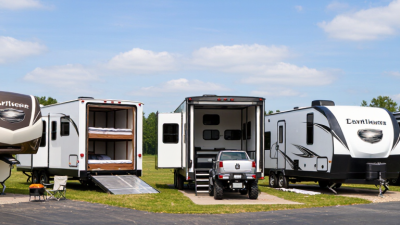
Choosing a toy hauler camper starts with accurate measurements, not attractive floor plans. Measure your motorcycle, bicycles, or utility vehicle at its widest and tallest points. Add space for mirrors, handlebars, and loading movement. Garage length matters too. A few extra inches can prevent frustrating storage problems.

Check the ramp’s rated capacity against the loaded vehicle’s weight, including fuel and accessories. I prefer a clear safety margin, because real loading conditions are rarely perfect. Examine the ramp angle as well. A steep angle can scrape low frames or reduce traction in wet weather. Inspect every tie-down point and confirm its working load rating. The anchor rating should exceed the force created during braking and uneven travel. Four secure points are often better than two, but placement must match the vehicle frame.

Measure ground clearance beneath the camper, especially near stabilizers, axles, and the rear departure angle. A campsite entrance may look harmless until the ramp drags across the ground. Check the combined payload carefully. Cargo, water, passengers, tools, and fuel all reduce available capacity. Ask for the actual axle ratings and verify them with certified scales when possible. I once trusted a brochure measurement and ignored interior trim; the vehicle technically fit, but loading was awkward. That mistake changed how I inspect every garage now. Leave room for error. Real life is untidy.

Check NFPA 1192 Compliance, Tire Load Ratings, and Essential Safety Systems

7 Tips to Choose the Best Toy Hauler Campers

Tip 1

Verify NFPA 1192 alignment before admiring the floor plan.

The standard covers propane systems, electrical wiring, fire protection, ventilation, and emergency exits. Ask for inspection records, not vague sales language. NFPA 1192 compliance is not a substitute for a professional inspection. I learned that paperwork can look complete while a loose connection remains hidden.

Tip 2

Match every tire’s load rating with the camper’s actual weight.

Check the placard, GAWR, GVWR, and cold-inflation pressure. Include fuel, water, tools, passengers, and loaded recreational equipment. NHTSA estimates that tire-related problems contribute to roughly 11,000 crashes annually. A tire may look healthy and still be overloaded. Weigh the fully packed camper at a certified scale, then compare each axle reading with its rating.

Tip 3

Test essential safety systems in person.

Confirm working trailer brakes, a breakaway switch, smoke and carbon-monoxide alarms, propane detection, GFCI protection, and clearly marked exits. Inspect the ramp cables and tie-down points for rust or stretching. The Recreational Vehicle Industry Association reported 313,174 wholesale RV shipments in 2023, showing strong market activity but not guaranteed quality. More choices can create rushed decisions. Bring a technician, even if the inspection feels excessive. Safety details are easy to miss beside polished cabinets and oversized garages.