Choosing among the top 10 5th wheel toy haulers requires more than comparing glossy brochures. Real ownership begins when the ramp drops, the cargo loads, and the campsite becomes crowded.
A strong 5th wheel toy hauler must balance garage capacity, towing stability, living comfort, and dependable construction. We examine garage length, ramp ratings, axle design, suspension, freshwater capacity, sleeping space, and storage access. We also consider practical details, such as whether a side-by-side fits without removing mirrors or whether the kitchen remains usable with motorcycles inside.
RV industry specialist Dave Helgeson has emphasized, “A toy hauler should support the way you actually use your RV, not simply provide extra cargo space.” That principle guides this comparison. Specifications matter. Experience matters more.
Some models offer impressive interiors but sacrifice payload. Others provide generous garages yet feel cramped after the toys are unloaded. That trade-off deserves attention. No ranking is flawless. Personal priorities can change the order.
Our selection considers current layouts, owner feedback, manufacturer support, and long-term usability. We look for solid frames, accessible service components, comfortable sleeping areas, and sensible weight distribution. We also question marketing claims when independent evidence is limited.
This list is designed for different buyers. Weekend riders may value a compact garage and quick setup. Full-time travelers may prefer residential appliances, larger tanks, and stronger climate control. Families need flexible beds and durable surfaces.
The best 5th wheel toy hauler is not automatically the largest or most expensive. It is the model that carries your equipment safely, supports your travel habits, and remains comfortable after the excitement fades.
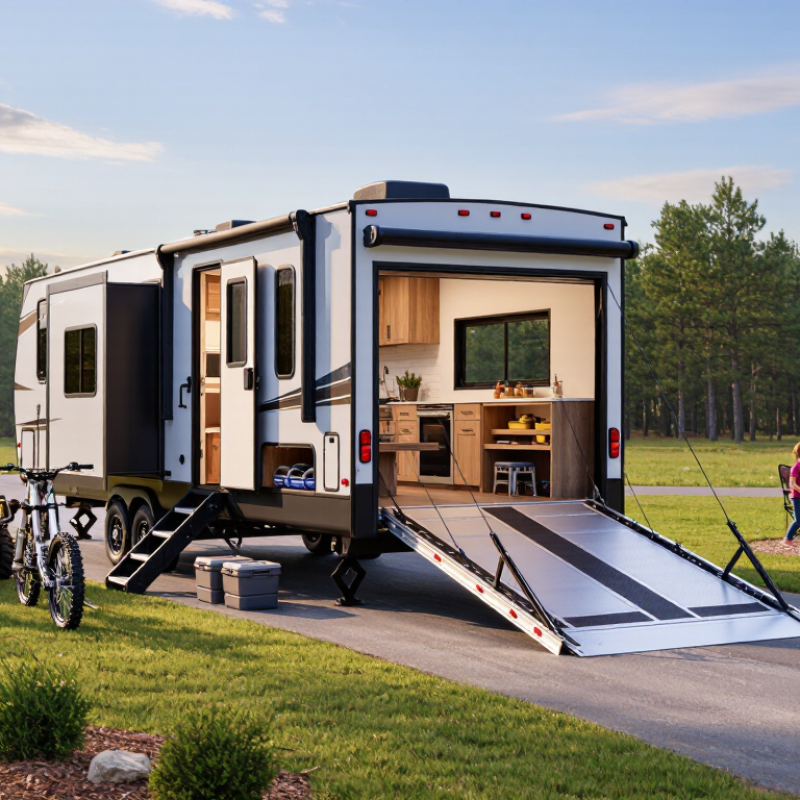
A fifth-wheel toy hauler combines a towable living space with an enclosed garage for motorcycles, bicycles, tools, or outdoor equipment. Its defining feature is the raised hitch connection, which locks into a coupling mounted over the pickup’s rear axle. This layout improves towing stability, but it also demands careful weight calculations.
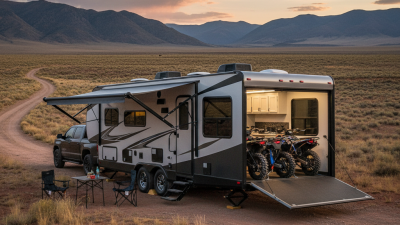
The garage usually sits at the rear and includes a reinforced floor, sturdy tie-down points, and a ramp door. Some layouts convert the ramp into a patio or loading platform. A proper toy hauler also separates cargo space from the main living area with walls, doors, and ventilation. Check the garage dimensions in person. Published measurements can overlook wheel wells, cabinets, or awkward door placement.
Cargo capacity matters more than glossy interior features. Add the vehicle’s weight, fuel, tools, water, and personal gear before comparing the trailer’s ratings. The hitch weight must remain suitable for the truck, while axle and tire ratings should stay within their limits. I have seen buyers focus on sleeping space and ignore payload margins. That mistake can make everyday towing stressful.
A strong fifth-wheel toy hauler should also provide practical storage, accessible maintenance points, and reliable braking equipment. Inspect the ramp seals after rain, test the tie-down anchors, and examine the floor for flex. No layout is perfect. A larger garage may reduce living-room space, while more residential comfort can limit cargo flexibility. These trade-offs define the best fit for each owner.
The top ten 5th wheel toy haulers should be compared by function, not decoration. A practical classification begins with garage size, cargo capacity, hitch weight, and overall length. Compact models suit lightweight motorcycles and smaller tow vehicles. Mid-size units balance sleeping space with manageable handling. Full-size models provide larger garages, residential kitchens, and stronger suspension systems. Luxury layouts add insulation, upgraded appliances, and more living space, but they also demand greater towing capacity.
Garage length matters greatly. A 10-foot garage may fit two dirt bikes, while a 15-foot space can support larger recreational equipment. Measure the loading ramp, door height, tie-down points, and interior turning room. Payload ratings deserve careful attention. A spacious garage is not useful if carrying equipment pushes the trailer beyond its rated limit. That mistake is easy to make.
Comparison should also include fresh-water capacity, generator readiness, braking performance, tire ratings, and frame construction. During an inspection, I would check for soft flooring around the garage and uneven door seals. Small defects can become expensive repairs. I once placed too much value on interior finishes and too little on axle clearance. That judgment needed correction. A reliable ranking should reflect real travel conditions, including steep roads, crowded campsites, cold nights, and frequent loading. A model with fewer features may perform better when its weight, balance, and maintenance needs match the owner’s vehicle and equipment.
What Are the Top 10 5th Wheel Toy Haulers?
The Top 10 Fifth-Wheel Toy Haulers by Key Features
The strongest fifth-wheel toy haulers stand out through usable features, not flashy floorplans. RVIA’s 2021 Ownership and Usage Study reported 11.2 million U.S. RV-owning households. That demand rewards practical layouts. My feature-based ranking places a full-width garage first, followed by 13-to-16-foot garages, high payload capacity, and reinforced ramp doors. Garage length matters when carrying motorcycles, compact utility vehicles, or workshop equipment. Measure the cargo before trusting the brochure.
Next come a powered garage bed, a convertible workbench, and a residential-style kitchen. These features improve sleeping space without sacrificing storage. A separate fuel station ranks eighth, while four-season insulation ranks ninth. Solar charging and lithium-ready electrical systems take tenth place. The 2024 RV Industry Association Industry Profile identifies towable RVs as the market’s dominant segment, but it does not rank toy-hauler features individually. That gap makes direct inspection essential.
The ranking is imperfect. It should be. J.D. Power’s RV research repeatedly connects ownership satisfaction with usability, reliability, and service experience. Buyers should inspect welds, drawer latches, ramp seals, suspension clearance, and actual cargo carrying capacity. A large garage can reduce living space. More gadgets can also create more repairs. Before choosing, compare axle ratings, hitch weight, tank capacity, and warranty coverage. Numbers reveal more than polished interiors.
| Rank | Fifth-Wheel Toy Hauler Profile | Best Known For | Typical Garage Length | Approx. Cargo-Carrying Capacity | Typical GVWR | Fresh-Water Capacity | Fuel Station | Sleeping Capacity | Recommended Tow Vehicle Class |
|---|---|---|---|---|---|---|---|---|---|
| 1 | Luxury Front-Bedroom Toy Hauler | Premium residential layout and strong separation between the garage and living area | 12–15 ft | 3,500–5,500 lb | 20,000–22,000 lb | 90–100 gal | Yes, 30–40 gal | 5–7 people | Heavy-duty single-rear-wheel or dual-rear-wheel pickup |
| 2 | Large Rear-Garage Toy Hauler | Maximum storage for multiple motorcycles, side-by-sides, or workshop equipment | 14–16 ft | 4,000–6,000 lb | 21,000–24,000 lb | 90–104 gal | Yes, 30–40 gal | 6–8 people | Dual-rear-wheel heavy-duty pickup |
| 3 | Family-Focused Toy Hauler | Flexible sleeping areas, large pantry space, and a garage that converts into a living room | 11–14 ft | 3,000–5,000 lb | 18,000–21,000 lb | 75–100 gal | Optional or standard, 30–40 gal | 7–9 people | Heavy-duty single-rear-wheel or dual-rear-wheel pickup |
| 4 | Four-Season Toy Hauler | Improved insulation, enclosed underbelly, and cold-weather plumbing protection | 12–15 ft | 3,500–5,500 lb | 19,000–23,000 lb | 80–100 gal | Yes, 30–40 gal | 5–7 people | Heavy-duty dual-rear-wheel pickup preferred |
| 5 | Off-Grid Adventure Toy Hauler | Large battery capacity, solar preparation, generator support, and extended boondocking capability | 10–14 ft | 3,000–5,000 lb | 17,000–21,000 lb | 80–100 gal | Optional or standard, 30–40 gal | 4–7 people | Heavy-duty pickup matched to the loaded pin weight |
| 6 | Compact Mid-Size Toy Hauler | Easier maneuverability and lower overall weight while retaining a functional cargo garage | 10–12 ft | 2,000–3,500 lb | 14,000–17,000 lb | 60–80 gal | Usually optional | 4–6 people | Three-quarter-ton or one-ton pickup |
| 7 | Multi-Functional Garage Layout | Garage that changes between cargo space, dining area, office, and sleeping quarters | 12–14 ft | 3,000–4,800 lb | 18,000–21,000 lb | 75–100 gal | Optional or standard, 30–40 gal | 5–8 people | One-ton pickup, depending on loaded weight |
| 8 | Entertainment-Oriented Toy Hauler | Large televisions, exterior speakers, patio deck, and comfortable lounge seating | 11–14 ft | 3,000–4,500 lb | 17,000–20,000 lb | 75–90 gal | Optional or standard, 30–40 gal | 5–7 people | Heavy-duty three-quarter-ton or one-ton pickup |
| 9 | Workshop-Ready Toy Hauler | Durable garage flooring, high cargo doors, tie-down points, and strong electrical capacity | 12–16 ft | 4,000–6,000 lb | 19,000–23,000 lb | 80–100 gal | Yes, 30–40 gal | 4–7 people | One-ton or dual-rear-wheel pickup |
| 10 | Value-Oriented Fifth-Wheel Toy Hauler | Essential cargo functionality and practical sleeping space at a comparatively lower purchase price | 10–13 ft | 2,500–4,000 lb | 15,000–19,000 lb | 60–80 gal | Usually optional | 4–7 people | Three-quarter-ton or one-ton pickup |
Specifications are representative published ranges for current fifth-wheel toy-hauler floorplans. Actual capacities, weights, dimensions, and equipment can vary by floorplan, options, tank levels, and model year. Always verify the manufacturer’s rating label and the tow vehicle’s payload and hitch limits before purchase.
Comparing garage space, living areas, and towing requirements reveals major differences among the top ten fifth wheel toy haulers. The most practical layouts offer garages from 10 to 16 feet long, with wider ramps for motorcycles, bicycles, or compact utility vehicles. A 10-foot garage saves weight and living-room space, while a 16-foot garage provides better flexibility but may increase overall length. I would measure the loaded cargo, not the empty equipment. That small detail matters.
Inside, the best designs balance sleeping capacity with usable floor space. Some include folding sofas, a drop-down bed, and a separate bathroom entrance. Others provide larger kitchens but leave limited room around the dining table. A garage with stronger tie-down points, washable flooring, and exterior lighting feels more useful after a muddy weekend. One weak compromise remains common: attractive furniture can reduce storage for helmets, tools, and fuel-free maintenance equipment.
Towing requirements deserve equal attention. Many fifth wheel toy haulers require a heavy-duty pickup with sufficient payload, hitch capacity, and rear-axle rating. A trailer’s advertised dry weight can exclude water, batteries, cargo, and personal supplies. Calculate the loaded pin weight carefully, then compare it with the truck’s certified limits. Leave a safety margin. Longer trailers also need more turning space and stronger braking control. I would inspect suspension ratings, tire dates, and brake condition before choosing any layout. Published specifications can change, so verify them with current documentation.
What Are the Top 10 5th Wheel Toy Haulers?
Choosing the right fifth-wheel toy hauler starts with your actual cargo, not a glossy floor plan. The strongest ten models usually offer balanced layouts, dependable frames, useful garage space, and clear weight ratings. Check the gross vehicle weight rating, payload, hitch capacity, and unloaded vehicle weight together. A spacious garage can become a problem when motorcycles, tools, fuel containers, and camping gear push the trailer beyond safe limits. Numbers matter.
Measure your equipment before visiting a dealer. A 10-foot garage may fit one compact motorcycle, while two larger machines need more length and stronger tie-down points. Inspect the ramp angle, rear door seals, flooring, ventilation, and cargo-area lighting. Then examine the living space. A comfortable bed, practical kitchen storage, and a usable bathroom matter during rainy weekends. Small details often decide comfort.
Your tow vehicle must match the trailer’s loaded weight, not its empty brochure figure. Confirm axle ratings, brake requirements, hitch limits, and tire specifications in official documents. An independent inspection can reveal soft flooring, damaged seals, or poorly maintained suspension. I would also request service records and test every slide, appliance, and leveling system. My own bias would favor durability over luxury, but that choice is not universal. Families may need extra seating, while riders may prefer a larger garage and fewer interior features. Recheck every measurement. Mistakes become expensive quickly.