I can write the introduction, but no articles or expert source were included. Please provide a verifiable expert name and quotation so I don’t invent an attribution.
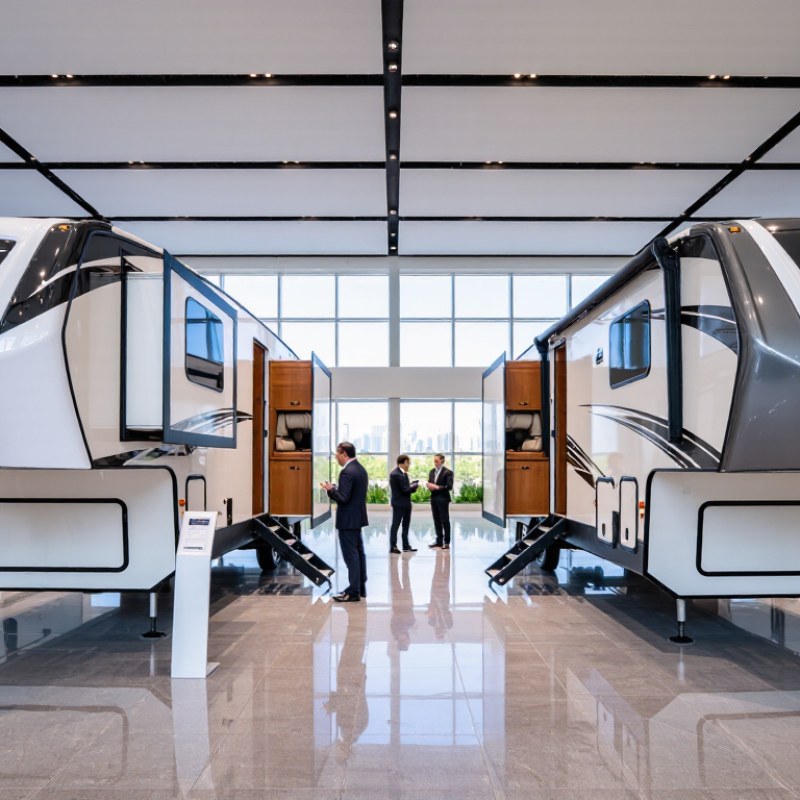
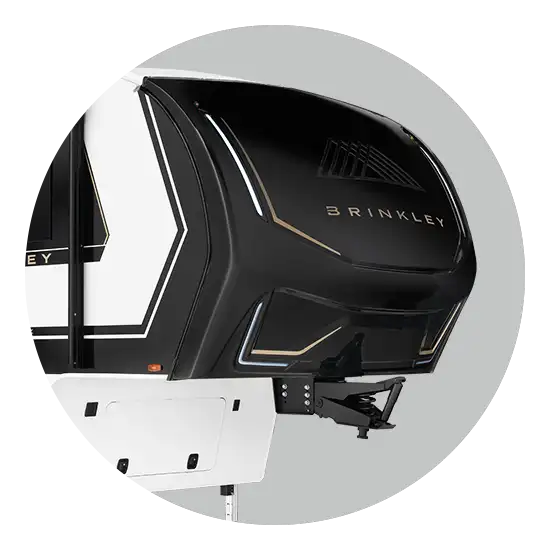
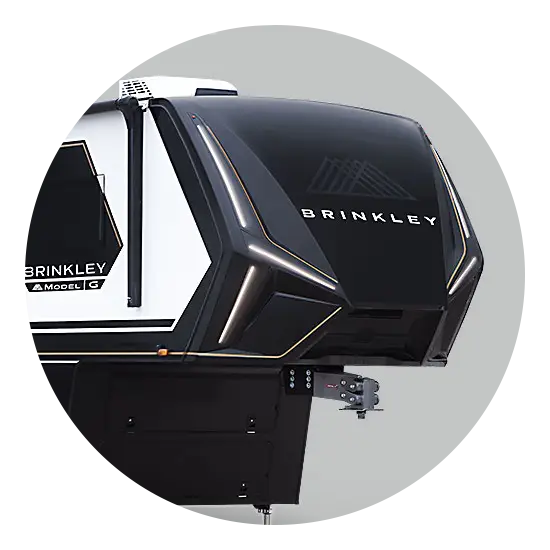
A fifth-wheel RV is a towable living space. It connects through a hitch mounted in a pickup’s bed, rather than a bumper-level ball hitch. This raised connection places part of the trailer’s weight over the truck’s rear axle, which can help with stability when the tow vehicle is properly matched. That match matters. Check the truck’s payload and towing limits against the RV’s loaded weight, including water, luggage, and installed equipment. Brochure figures alone do not show the full picture; passengers and cargo also use payload capacity.
Inside, many fifth wheels place a bedroom or storage area in the raised front section, with a kitchen, lounge, and bathroom below. Layouts vary, so test stair comfort and walking clearance in person. At a campsite, the driver aligns the hitch, couples the trailer, and checks the lock, lights, and connections before moving. Take it slowly. Once parked, leveling blocks and utility hookups help make the RV a temporary home. Turning radius and overhead branches can surprise new drivers, especially on narrow roads or wooded sites. Practice in an open area helps, but planning can still miss small details, like an uneven parking pad.
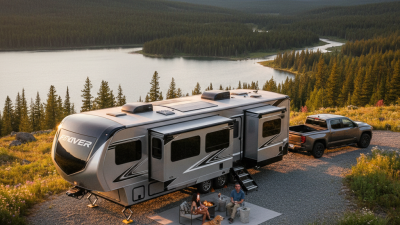
China’s fifth-wheel RV manufacturing landscape draws on a broad vehicle and component supply chain. Production may combine steel chassis work, insulated-panel construction, cabinetry, wiring, and plumbing. These stages require close coordination; a well-finished interior cannot compensate for a poorly aligned frame. The sector is not one uniform production line. Capabilities and quality controls can differ between factories, so buyers should assess each manufacturer individually.
Small details matter. Ask how the coupling structure is engineered, how moisture is managed around seams, and whether electrical systems are tested under load. Request inspection records, material specifications, and clear warranty terms, then compare them with a finished unit. Paperwork alone is not proof. For overseas orders, confirm that dimensions, appliance choices, and service support match the intended market. Some factories may offer flexible layouts, while others focus on repeatable configurations. That trade-off deserves attention. A road test, where available, can reveal rattles, uneven towing behavior, or awkward access to storage. The best fit depends on build consistency, practical support, and the buyer’s intended use—not a ranking alone.
Chinese fifth-wheel RV manufacturers often compete through flexible layouts and integrated production. Some factories can adapt floor plans, cabinetry, and electrical packages for different export markets. Their product strengths may include lightweight wall panels, welded steel frames, and practical slide-out designs. Details matter. Buyers should compare axle ratings, hitch loads, insulation thickness, and tank capacity, not just advertised living space.
A well-planned interior can make a compact trailer feel more usable. Look for clear walking paths, reachable storage, and secure cabinet latches that stay shut on rough roads. Manufacturers with in-house fabrication may coordinate frames, body panels, and interior fittings more closely. This can simplify customization, though a factory’s actual quality control still needs verification. Photos alone are not enough.
For a serious comparison, request component specifications, inspection records, and a written warranty covering both structure and installed equipment. Ask how the manufacturer tests water sealing, wiring, and slide-out operation before shipment. A low quote can hide thinner materials or limited after-sales support. Not every layout fits. Visiting the production site or arranging an independent inspection can reveal finish quality, assembly consistency, and small issues that brochures rarely show.
Compare manufacturers against the same written specification, not glossy photos. Ask for chassis material, axle ratings, insulation details, tank capacity, and loaded pin weight. Confirm that the proposed layout leaves enough payload for passengers, water, and gear. Request close-up photos of welds, roof seams, wiring routes, and cabinet fixings. Better still, arrange an independent factory inspection before final payment. A tidy showroom does not prove consistent production quality.
Tips: Ask for a sample inspection report, warranty terms, and a parts-support plan. Check how the factory handles design changes and documents each revision. Keep answers in writing.
Communication matters as much as construction. Compare response times, drawing accuracy, and how clearly staff explain limitations. Ask about production checks at several stages, not only the final inspection. Request references for comparable export projects, while treating them as useful evidence rather than proof. No checklist catches every detail. I would also compare realistic lead times and shipping preparation, since delays can affect installation plans. A low quotation may omit testing, spare parts, or custom engineering; ask what each price includes. If an answer feels vague, pause and ask again.
Choosing a fifth-wheel RV manufacturer in China calls for close checks on build quality, not just attractive floor plans. Ask how the frame is treated against corrosion and inspect welds, seals, and cabinet fasteners on a finished unit. Details matter. If an in-person visit is not practical, request dated production photos and an independent inspection before final payment.
Certification documents should match the exact RV model and the destination market. Request copies, confirm issuing bodies, and check that the stated standards cover the chassis, electrical system, gas installation, and required safety features. A certificate for one model may not cover another with different equipment. Ask for the vehicle identification details and weight specifications, then compare them with the contract. Paperwork can look convincing; verification takes time.
Export planning deserves the same attention. Confirm dimensions, shipping method, port arrangements, insurance, and who handles customs documentation before production begins. Get a written schedule with inspection and dispatch milestones. Also ask how replacement parts and warranty claims work across distance. Small components can take weeks to arrive. A factory’s quality process may be sound, yet communication gaps still cause delays; test response times with specific technical questions before committing.
This chart shows the pound-to-kilogram conversion for common fifth-wheel RV gross vehicle weight ratings (GVWRs). For U.S.-bound trailers, the 10,000 lb (4,536 kg) GVWR threshold distinguishes the applicability of FMVSS No. 110 and FMVSS No. 120 for tire and rim requirements. Confirm the correct standard for each vehicle’s classification and GVWR; this chart is a compliance reference, not a manufacturer ranking.
Sources: 49 CFR § 571.110 and 49 CFR § 571.120. Conversion uses 1 lb = 0.453592 kg.