What Is a 5th Wheel RV?

A 5th wheel RV is a towable recreational vehicle designed to connect through a specialized hitch in a pickup truck’s bed. Unlike a travel trailer, its front section extends over the truck’s rear axle. This design can improve stability and create more interior space. Many models include a raised bedroom, full kitchen, bathroom, slide-outs, and residential-style furniture. It feels closer to a small apartment than a basic camping trailer.

Industry data explains its growing appeal. The RV Industry Association’s 2024 RV Shipment Report shows towable RVs remain the dominant part of the North American market. Its 2024 Economic Impact Study also estimates that recreational vehicles generate about $140 billion in annual economic activity in the United States. The 2024 KOA North American Camping Report adds useful context, reporting tens of millions of camping households across the continent. These figures do not prove that a 5th wheel rv suits every traveler. They show a strong market for flexible, road-based accommodation.

The important question is compatibility. A modern 5th wheel rv may weigh more than 10,000 pounds before personal belongings, water, and equipment are added. Buyers must compare the trailer’s gross vehicle weight rating with the truck’s payload, towing capacity, axle ratings, and hitch limits. That calculation can be less exciting than choosing leather seating. It matters more. A short test drive may hide braking, turning, and campground challenges. The best choice depends on truck specifications, travel habits, storage access, and driving confidence. Even experienced owners sometimes underestimate total weight. That mistake deserves honest attention.
What Is a 5th Wheel RV?

Definition and Core Features of a 5th Wheel RV

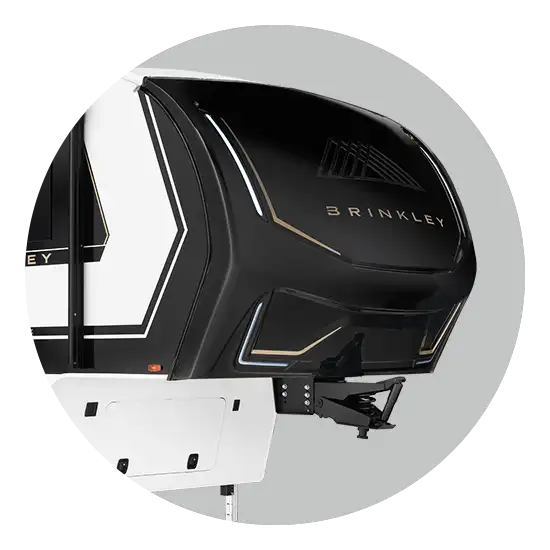
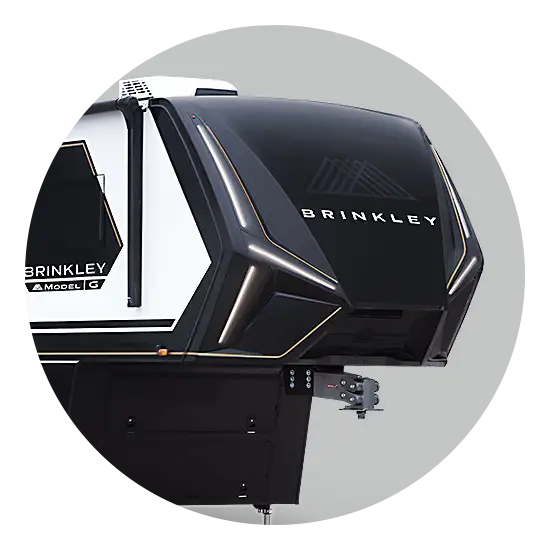
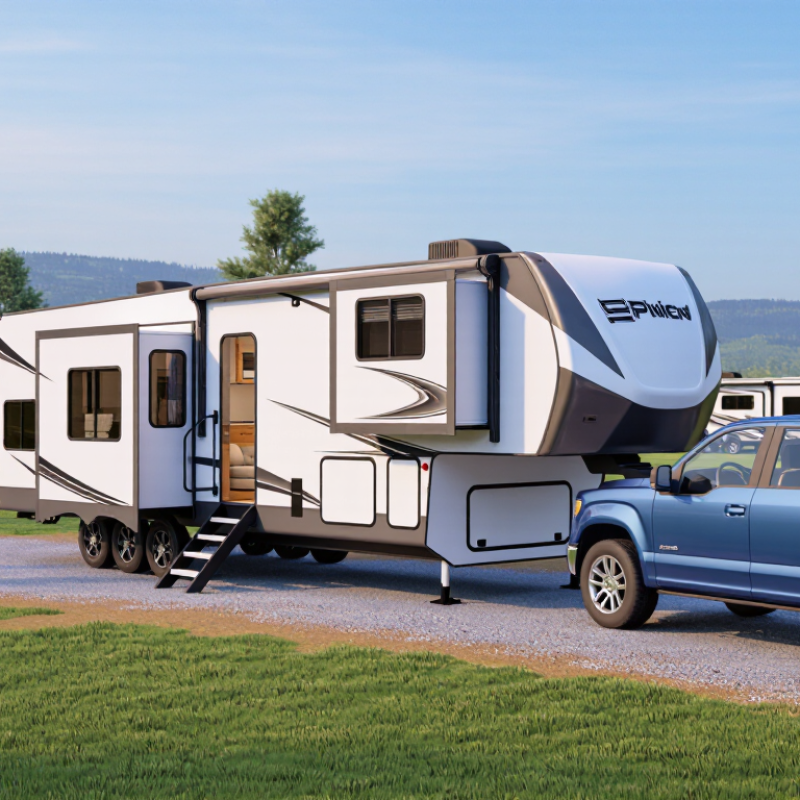
A fifth-wheel RV is a towable recreational vehicle connected to a pickup truck by a hitch mounted in the truck bed, usually above or just ahead of the rear axle. Its raised front section extends over the truck bed, creating a distinctive two-level shape. Unlike a travel trailer’s rear-mounted hitch, this connection places more of the trailer’s weight over the tow vehicle. When the truck and trailer are properly matched, the arrangement can feel controlled on the road.

The raised section often holds a bedroom, while the main floor may include a kitchen, seating area, and bathroom. Slide-outs can widen the living space when parked. Look closely at the floor plan: a broad sofa may be comfortable, but it can leave less room to move around the kitchen. Small details matter. So does weight. The truck must have enough payload capacity for the hitch and the trailer’s pin weight, not just enough advertised towing capacity. Check the vehicle’s ratings and the RV’s loaded weight before choosing a setup. And remember, the hitch occupies part of the truck bed. That trade-off is easy to overlook.

How a 5th Wheel RV Connects to a Tow Vehicle

What Is a 5th Wheel RV?
How a 5th Wheel RV Connects to a Tow Vehicle

A fifth-wheel RV connects to a hitch mounted in a pickup truck’s bed. A metal pin, called the kingpin, extends from the trailer’s pin box and locks into the hitch jaws. The hitch sits over or slightly ahead of the truck’s rear axle, helping distribute the trailer’s load. It looks simple. Alignment takes practice.

To connect, chock the trailer wheels and position the truck so the hitch meets the kingpin squarely. Open the hitch jaws, then back up slowly until the kingpin seats and the jaws close around it. Check the locked connection visually and perform the hitch maker’s recommended pull test before raising the landing legs. Attach the electrical plug and breakaway cable, then check that the truck bed and trailer have adequate clearance when turning.

Tips: Confirm the hitch and truck are rated for the trailer’s loaded weight and pin weight. Follow both vehicle manuals; a qualified installer can verify fit and setup. Even careful drivers can misjudge alignment, so pause and check rather than forcing the connection.

What Is a 5th Wheel RV? - How a 5th Wheel RV Connects to a Tow Vehicle
Connection Point or Feature How It Works What to Check
Fifth-wheel hitch A hitch mounted in the bed of a pickup truck supports and secures the trailer’s kingpin. Its position is generally over or slightly ahead of the truck’s rear axle. Confirm that the hitch is properly installed and that its rated capacity is suitable for the trailer and the truck.
Kingpin and hitch jaws The trailer’s kingpin slides into the hitch head, where locking jaws close around it to form the main mechanical connection. Before travel, verify that the jaws are fully locked and that the hitch’s safety indicator shows a secure coupling.
Pin weight Part of the loaded trailer’s weight rests on the hitch and is carried by the truck. This is commonly called pin weight or fifth-wheel hitch weight. Include pin weight, passengers, cargo, and hitch equipment when checking the truck’s payload and axle limits.
Electrical connector A trailer-to-truck electrical connection supplies power for functions such as running lights, turn signals, and electric trailer brakes. Check that the connector is fully seated and test the trailer lights and brakes before departure.
Breakaway system A breakaway switch is attached to the tow vehicle by a separate lanyard. If the trailer separates, the switch activates the trailer’s electric brakes using its onboard battery. Attach the lanyard to a suitable point on the truck, separate from the electrical connector, and follow the trailer maker’s inspection guidance.
Landing gear The trailer’s landing gear supports its front section when it is parked or disconnected from the truck. Raise the landing gear fully before towing and use it only as directed when connecting or uncoupling.
Bed and cab clearance The elevated hitch connection allows the trailer to pivot over the truck bed, but the trailer’s front cap still needs adequate clearance from the cab and bed rails. Check clearance on level ground and during turns; truck, hitch, and trailer configurations affect the required space.
Vehicle and hitch ratings Safe towing depends on the ratings of the truck, hitch, trailer, and tires, not just the advertised maximum tow rating of the vehicle. Compare the loaded trailer weight and pin weight with the applicable manufacturer ratings and vehicle loading information.

Main Interior Spaces and Essential Equipment

A fifth wheel is a towable RV whose raised front section connects to a pickup truck’s hitch. Inside, that raised area often holds the main bedroom, while the lower section may include a kitchen, bathroom, dining space, and lounge. Layouts vary, so check where doors, steps, and storage sit before judging floor space. A wide-looking room can still feel cramped when a slide-out is closed.

The RV Industry Association’s 2023 RVs Move America Economic Impact Study estimated that 11.2 million U.S. households owned an RV. That broad ownership figure does not describe fifth-wheel layouts, but it helps explain why practical interior design matters. Look for a refrigerator, cooktop, sink, water-heating system, and clearly reachable electrical controls. Check that cupboard latches hold and drawers do not block walkways. Small details matter.

For comfort, inspect bed access, bathroom ventilation, and places to store wet shoes or coats. A furnace and air conditioner may be fitted, but their performance depends on insulation, weather, and power supply. Test lights, taps, fans, and appliances during an inspection. I would also sit at the table and walk through the space with slide-outs retracted; brochures rarely show that awkward moment.

What Is a 5th Wheel RV? Main Interior Spaces and Essential Equipment

A fifth wheel is a towable RV that connects to a pickup truck with a special hitch. Its interior commonly includes living, kitchen, sleeping, and bathroom areas, with storage and walkways throughout.

Illustrative floor-area estimates for a representative layout, not fixed specifications. Actual layouts and equipment vary by RV size and design. Common equipment may include a refrigerator, cooktop, sink, toilet, shower, bed, seating, and storage cabinets.

Common 5th Wheel RV Types and Floor Plans

A fifth-wheel RV connects to a hitch mounted in a pickup truck’s bed. Its raised front section often holds a bedroom, while the lower level provides living space. That shape creates distinct floor-plan options, but interior layouts vary widely. A few steps can separate the bedroom from the kitchen and lounge.

Rear-living plans place sofas and chairs at the back, often facing a large window. They suit travelers who value a roomy sitting area.

Rear-kitchen layouts move food preparation toward the back and may offer extra counter space.

Bunkhouse plans add sleeping spots for children or guests, sometimes at the cost of storage.

Toy-hauler models include a garage area for equipment, which can also serve as flexible living space. Handy, but not always easy to furnish.

Look beyond the room labels.

Opposing slide-outs can make a kitchen feel open, while a narrow aisle may still limit movement when several people are inside. Check where the bathroom sits, how much pantry space is available, and whether the dining table fits your daily routine.

The elevated front bedroom can offer privacy, though climbing the stairs may become tiresome. Compare the floor plan with your actual gear and travel habits; a beautiful layout on paper may feel different after a rainy afternoon indoors.

Key Benefits, Limitations, and Ownership Considerations

What Is a 5th Wheel RV?

A 5th wheel RV connects to a special hitch mounted inside a pickup truck bed. This position places the trailer’s weight over the rear axle, improving balance during towing. Many owners appreciate the raised front section, which often provides a private bedroom or extra storage. The wider interior can also feel more like a small apartment than a conventional travel trailer.

The main benefit is stability on highways, especially during steady towing. Some layouts offer separate living and sleeping areas, residential-style kitchens, and generous storage. However, these advantages require careful planning. A heavy-duty truck may be necessary, depending on the RV’s loaded weight. The truck bed also becomes partly occupied by the hitch. Parking can feel awkward in tight campgrounds. Turning requires practice, and the trailer’s height may limit access to older bridges, covered storage, or tree-lined roads. Many new owners underestimate maintenance, insurance, registration, and tire replacement costs. I would not choose one based on floor plan alone.

Tips: Check the truck’s payload, towing, and hitch ratings before shopping. Weigh the loaded RV at a certified scale. Leave room for water, tools, food, and passengers. Practice reversing with a spotter in an empty lot. Measure your storage space twice. A comfortable sofa means little if the vehicle cannot safely tow the trailer. Think about how often you will move, because setup takes time and patience.