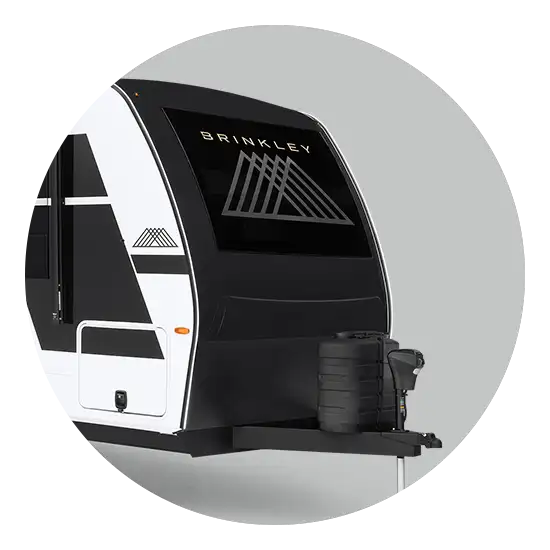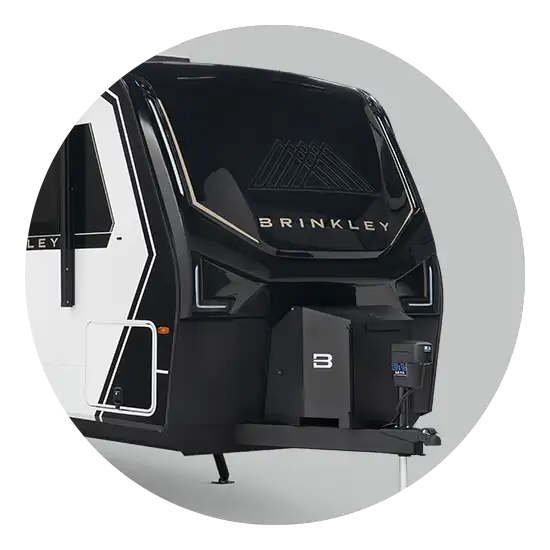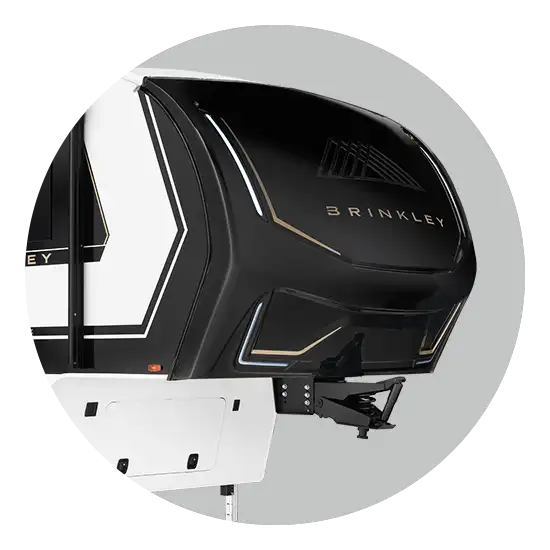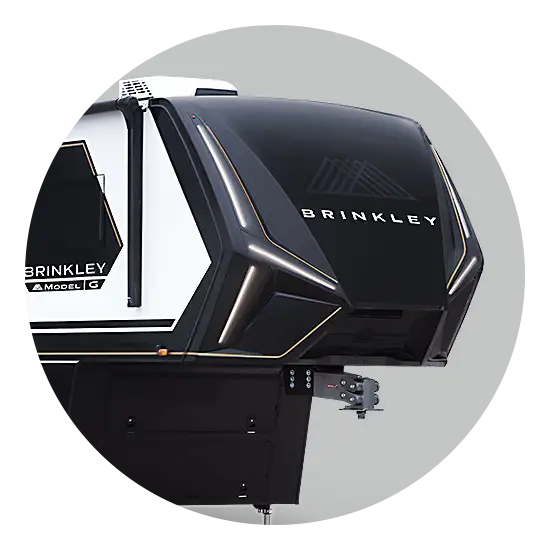
Are Brinkley RVs made in China? The short answer is no, although the complete story is more complicated than a simple country-of-origin label.
Brinkley RVs are designed and assembled in the United States, with manufacturing operations based in Goshen, Indiana. Walk through the facility, and the details become visible: aluminum framing, interior cabinetry, electrical wiring, plumbing systems, and quality inspections are handled during the American production process. However, many RV manufacturers source selected components internationally. Appliances, electronics, hardware, fabrics, and other parts may come from different countries, including China. That does not mean the finished Brinkley RV is manufactured in China.
Nate Brinkley, a co-founder of Brinkley RV, has described the company’s approach this way: “We are focused on building a better RV through quality, innovation, and customer feedback.” That statement matters because ownership and manufacturing location are not the same thing. A brand can assemble its products in Indiana while participating in a global supply chain.
Still, buyers should look beyond marketing language. Ask for the specific model’s component list, warranty coverage, and production details. Parts can change between model years. Dealers may also explain which systems receive domestic service support.
The answer is not perfectly simple.
Brinkley RVs are generally American-built, but they are not necessarily made from American-made parts alone. This distinction helps shoppers evaluate price, durability, service access, and long-term ownership with greater confidence. Small details matter here, and online claims can sometimes oversimplify a complicated manufacturing process.
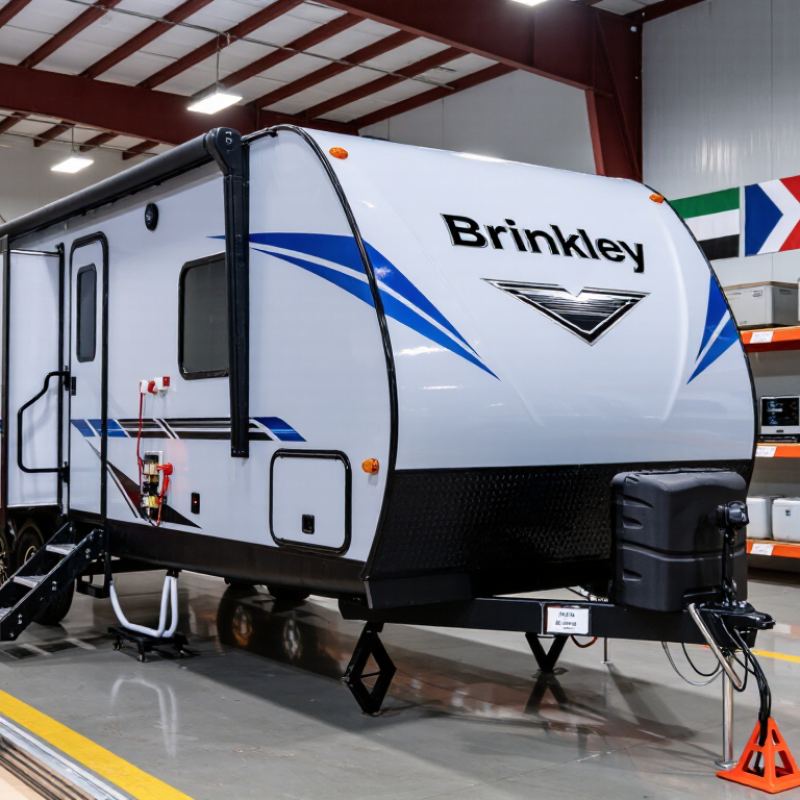
Brinkley RVs are generally presented as products of a U.S.-based recreational vehicle company, not as fully China-made units. The company’s operations are associated with Indiana, a major American RV manufacturing region. Its leadership includes experienced professionals from the RV industry. That background matters because design choices often reflect real factory and service experience.
Ownership appears to remain private, rather than being controlled by a large publicly traded corporation. Public information describes an independent company built by industry veterans. However, private ownership can make detailed financial and supplier information harder to verify. Buyers should check current corporate filings, warranty documents, and dealer records before making firm assumptions.
Manufacturing is rarely limited to one country. RVs commonly combine American assembly with imported appliances, electronics, hardware, fabrics, and structural components. Therefore, saying an RV is “made in China” may oversimplify its supply chain. The strongest evidence comes from the vehicle’s certification label, country-of-origin statements, and written answers from the manufacturer. Ask specific questions. Where is final assembly completed? Which major systems are imported? Who handles warranty repairs? Online discussions can help, but they are not always reliable. Even official descriptions may change as production expands. That is worth remembering.
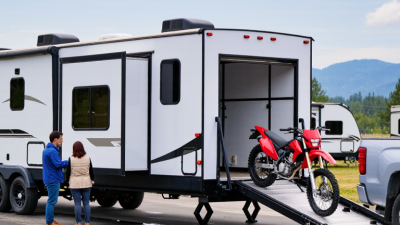
Public production information places these RVs’ design, engineering, and final assembly in Indiana, United States. They are not generally presented as China-built recreational vehicles. The manufacturing process includes framing, plumbing, electrical installation, interior fitting, and quality checks at domestic facilities. However, “assembled in the United States” does not mean every component is American-made. Appliances, electronics, hardware, and specialty materials may come from international suppliers.
That distinction matters.
The RV Industry Association reported 313,174 wholesale RV shipments in 2023. Its economic-impact research also estimated roughly $140 billion in annual U.S. economic output from the RV sector. These figures show a substantial domestic production network, but they do not prove the origin of one specific component or model. A careful buyer should inspect the certification label, vehicle identification number, warranty documents, and country-of-origin statements. Those records are more reliable than a dealer’s casual description.
The company’s design language appears American, with layouts shaped around large kitchens, residential furniture, and extended camping. Factory assembly is a different question. Public materials can explain where final construction occurs, yet they rarely disclose every supplier. That is the imperfect part of the answer. Calling the RV “made in the USA” may be reasonable for final assembly, but it can oversimplify a global supply chain.
| Manufacturing Dimension | Typical Location or Origin | What the Stage Involves | How to Interpret the Information | Verification Method |
|---|---|---|---|---|
| Product Design and Engineering | United States | Floor plans, structural specifications, safety features, electrical layouts, plumbing systems, and interior configurations are developed before production. | Design origin is separate from the country where components are produced or where the finished recreational vehicle is assembled. | Review the manufacturer’s official product documentation, technical disclosures, or unit-specific build records. |
| Major Body and Structural Production | Usually the country of final vehicle production | Wall panels, roof assemblies, floors, framing, slide-out structures, and exterior body components are fabricated and integrated. | The location of major structural work is more relevant to the vehicle’s manufacturing origin than the source of individual small parts. | Check the certification label, vehicle identification number, production label, and manufacturing records. |
| Component Sourcing | Multiple countries, including the United States and overseas markets | Appliances, electronics, lighting, hardware, textiles, plumbing fittings, suspension parts, and other components may come from different suppliers and countries. | Imported components do not automatically mean that the complete recreational vehicle was manufactured or assembled in China. | Inspect component labels and supplier markings separately from the vehicle’s final-assembly information. |
| Final Assembly | United States for many recreational vehicles sold in the U.S. market | Structural sections, chassis systems, interior equipment, electrical systems, plumbing, cabinetry, appliances, and finishing materials are combined into a completed unit. | Final assembly is a key indicator of where the finished vehicle was produced, but it does not prove that every part originated in that country. | Use the vehicle certification label, origin statement, and official documentation for the specific unit. |
| China-Related Production | Possible source for selected components or materials | Some globally traded parts and materials used in recreational vehicles may be manufactured in China or other overseas markets. | Component sourcing should not be confused with complete-vehicle production. A definitive conclusion requires unit-specific evidence. | Look for country-of-origin markings on individual parts and compare them with the finished vehicle’s certification information. |
| Country-of-Origin Determination | Based on the vehicle’s manufacturing and substantial-transformation facts | Origin assessments generally consider where significant manufacturing or assembly creates the completed product, rather than where every input was made. | Marketing language alone may not establish the legal country of origin for a particular recreational vehicle. | Confirm the result through the certification label, manufacturer records, dealer documentation, and applicable customs or consumer-labeling rules. |
Are Brinkley RVs Made in China?
The country of assembly does not identify every component’s origin. A recreational vehicle assembled in the United States may contain appliances, electronics, fasteners, fabrics, windows, and suspension parts sourced from several countries. Public product information rarely provides a complete bill of materials. That gap matters.
The RV Industry Association’s 2024 industry reports track wholesale shipments, but they do not publish component-level origin data for individual manufacturers. U.S. International Trade Commission DataWeb shows that the United States imports substantial volumes of vehicle parts, electrical equipment, plastics, and furniture under separate tariff classifications. Those records indicate supply-chain movement, not a complete origin map for one RV.
China is one possible source for selected components, especially electronics, lighting, hardware, and molded accessories. Mexico, Canada, Southeast Asia, and domestic suppliers also serve the North American RV market. The U.S. Census Bureau explains that country-of-origin marking generally applies to imported articles, while assembled products can involve multiple origin claims. In practice, a label may describe final assembly rather than every part inside the walls.
A careful buyer should request component origin details, warranty documentation, and serial-number records. Look closely at the converter, refrigerator, suspension hardware, and water fittings. Small details reveal more than a sales slogan. Yet even this inspection remains incomplete. Supply chains change, and published data can lag behind production.
Determining whether an RV is made in China requires more than reading an online listing. The most reliable evidence is the vehicle certification label, usually attached near the entry door, inside a cabinet, or beside the driver’s seat. Record the manufacturer name, vehicle identification number, model year, and stated country of final assembly. Take clear photographs before purchasing.
Compare that label with the VIN paperwork, sales invoice, owner’s manual, and title documents. These records should identify the same vehicle and production details. Ask the dealer for a written statement about final assembly and major manufacturing stages. A vague answer deserves caution. Components may come from several countries, while final assembly occurs elsewhere. That distinction matters.
Check the VIN through an official manufacturer or government vehicle database when available. Independent inspection can reveal mismatched labels, altered documents, or unusual construction details. Look beneath cabinets, around window frames, and inside storage compartments for consistent production markings. Do not rely on a single sticker.
Small errors happen.
I would also ask for the original certificate of origin and import documentation, if applicable. Some sellers may not have every record immediately, but they should explain what exists and why. Recheck the information before signing anything. Online comments can help, yet they are not proof of manufacturing origin. My own review would remain cautious if the documents conflicted, even when the RV appeared well built.
Use the RV’s 17-character VIN together with its certification label and official records. The first three characters identify the manufacturer and region, while the plant code is typically located at position 11. A VIN decoder can provide a lead, but the certification label and manufacturer or regulatory documentation should be used for confirmation.
Comparing this newer American luxury RV maker with established domestic manufacturers requires more than checking the assembly plant’s address. The RV Industry Association reported approximately 340,000 wholesale RV shipments in 2024, showing a large but competitive market. Shipment volume does not prove quality or American content. It measures units, not construction depth.
Many U.S.-based manufacturers use global supply chains for appliances, electronics, suspension parts, windows, and hardware. That practice is common across the industry. The RV Industry Association’s 2024 data also separates towable and motorized shipments, but it does not identify each component’s country of origin. Buyers should request a written origin statement, warranty terms, and parts-support policy. Details matter.
Compared with older American brands, a newer builder may offer cleaner layouts, larger storage, and more modern insulation packages. However, its dealer network and long-term repair history may be less developed. That is a real weakness. J.D. Power’s RV ownership studies repeatedly show that service experience and reliability influence satisfaction, not just floor-plan appeal. A careful inspection should check cabinet alignment, slide movement, roof seals, tank fittings, and electrical labeling. Small defects reveal larger habits. I would also compare recall records and warranty response times before assuming a premium badge guarantees premium ownership. The “made in China” question is therefore incomplete; final assembly, component sourcing, engineering control, and after-sale support deserve equal attention.