What Are the Top 10 Toy Hauler Travel Trailers?
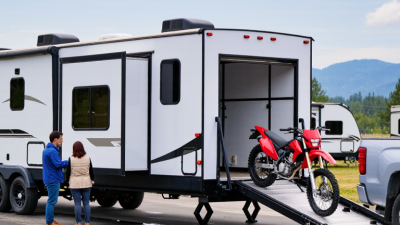
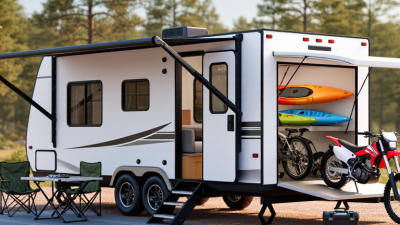
Choosing the right toy hauler travel trailer involves more than comparing floor plans and glossy photographs. These trailers combine living space with a rear garage, making them useful for motorcycles, bicycles, kayaks, tools, and outdoor equipment. Yet, every advantage brings a compromise. A larger garage may reduce bedroom space, increase weight, or require a stronger tow vehicle.
RV educator Mark Polk has often emphasized, “The best RV is the one that fits your needs.” That principle guides this list of the top 10 toy hauler travel trailers. The selection considers cargo capacity, garage length, ramp usability, sleeping arrangements, towing demands, interior durability, owner support, and overall value. A practical trailer should load easily, remain stable on the highway, and still feel comfortable after the toys are unloaded.
Details matter. Imagine a muddy dirt bike near the ramp, helmets stored beneath a bench, and two adults preparing dinner after a long ride. Small features can change that experience. Tie-down placement, washable flooring, ventilation, and storage height deserve serious attention. So does the trailer’s loaded weight.
No ranking can suit every traveler. That is the honest limitation. A weekend rider may prefer a compact model, while a family may need a larger garage and separate beds. Some advertised capacities also seem impressive until real-world gear is added. This guide examines those differences carefully, helping readers compare each toy hauler travel trailer with their actual habits, vehicle limits, and travel expectations.
Toy Hauler Travel Trailer Classes Under RVIA and ANSI A119.5 Standards
What Are the Top 10 Toy Hauler Travel Trailers?
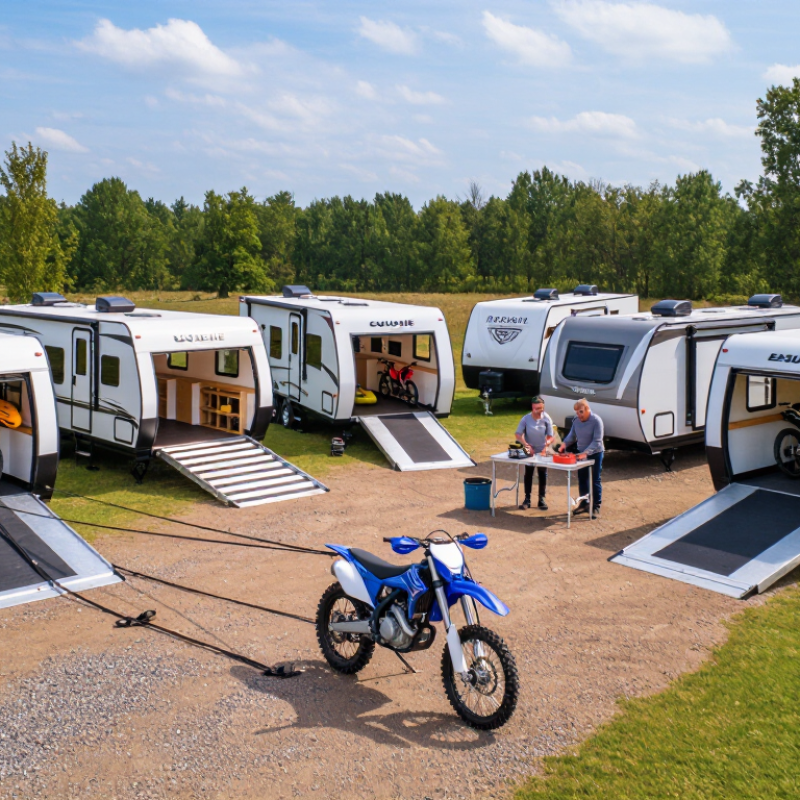
The best toy hauler travel trailers are not chosen by garage size alone. Buyers should examine construction, weight ratings, ventilation, and certified safety systems. Common choices include compact single-axle models, family bunk layouts, rear-garage trailers, front-bedroom designs, dual-axle units, expandable garages, high-clearance models, lightweight aluminum-frame trailers, large cargo-living hybrids, and long-stay layouts. These ten types serve different towing and storage needs.
The standards require careful interpretation. RVIA certification generally indicates that a recreational vehicle was built under recognized industry standards and inspection procedures. ANSI A119.5 mainly addresses park model recreational vehicles, not every conventional toy hauler travel trailer. Therefore, a listing that mentions both standards deserves closer review. Ask the seller which standard applies to the complete trailer, not only one component. Check the certification label, vehicle identification details, gross vehicle weight rating, cargo carrying capacity, axle limits, electrical protection, propane installation, and emergency exits. A polished interior can hide a poor payload margin. I have seen shoppers focus on sleeping space and overlook tongue weight. That mistake can make towing stressful.
Tips:
Measure your equipment before choosing a garage. Include ramps, fuel-free accessories, cabinets, and tie-down clearance. Confirm your tow vehicle’s actual payload, not its advertised maximum. Inspect seals around the ramp door after rain. If documentation feels vague, pause the purchase. A second inspection is cheaper than correcting an unsuitable trailer.
GVWR, UVW, and CCC Data Used to Compare the Top 10 Models
Comparing the top ten toy hauler travel trailers requires more than checking floorplans or garage length. GVWR shows the maximum legal loaded weight. UVW reflects the trailer’s factory weight before personal gear, water, and installed options. CCC is the remaining carrying capacity. A higher CCC usually offers more practical flexibility.
The data should be read carefully. Manufacturer specification sheets often list approximate UVW figures, and optional furniture can reduce available capacity. The RV Industry Association’s 2024 shipment report recorded 342,220 wholesale RV shipments, showing strong market activity but not proving that every model suits heavy cargo. NHTSA trailer-safety guidance also emphasizes correct loading, tire ratings, and matching trailer weight with the tow vehicle. In this comparison, models rank higher when their GVWR, UVW, and CCC create a useful balance. A large garage can still be restrictive if CCC is modest. That is easy to miss.
Tips: Weigh the loaded trailer before travel. Include fuel, tools, batteries, water, and recreational equipment. Do not rely on brochure estimates alone. A certified public scale provides better evidence. The ranking is not flawless, because real-world payload changes with each build and trip. Rechecking the numbers is part of responsible ownership.
Garage Size, Ramp Capacity, Sleeping Space, and Interior Floor Plans
The top 10 toy hauler travel trailers should be compared by usable garage space, not exterior length alone. Measure the garage from wall to ramp, then check its width between cabinets. A 12-foot garage may fit two bikes, but tie-down positions can reduce practical space. Ramp capacity also matters. Always separate the ramp rating from the trailer’s total cargo capacity. A strong ramp feels stable underfoot, with minimal flex.
Sleeping space changes the daily experience. Some layouts provide a fixed bed above the garage, while others use folding sofas or electric beds. Count the real sleeping surfaces, including mattress width and aisle access. A family may appreciate a private front bedroom, but guests could find a converted garage uncomfortable. Measure the mattress area before buying. Paper dimensions can mislead.
Interior floor plans deserve careful attention. A kitchen island may look attractive, yet it can block movement when bikes are loaded. A side-cargo layout often improves access, while a rear ramp patio can create useful outdoor living space. Inspect cabinet hinges, bathroom clearance, and ventilation near the garage. I would also test the loading angle with a sample ramp height. Small mistakes become frustrating quickly. The best choice balances garage size, ramp strength, sleeping comfort, and everyday movement, rather than chasing the largest floor plan.
Tow Ratings, Hitch Limits, and SAE J2807 Compatibility Considerations
What Are the Top 10 Toy Hauler Travel Trailers?
The top ten should be judged by towing compatibility, not showroom size. Useful choices include compact single-axle, lightweight dual-axle, mid-size garage, front-bedroom, rear-ramp, elevated-deck, family bunk, off-road, luxury, and extended-garage layouts. RV Industry Association shipment reports consistently show towables dominate recreational vehicle deliveries, but popularity does not prove safe matching. A larger garage can add motorcycles, fuel, water, tools, and several hundred pounds quickly.
Check the tow vehicle’s payload, rear-axle rating, gross combined weight rating, hitch limit, and receiver rating. The NHTSA tire-and-loading placard is a practical starting point. It shows how much occupant and cargo weight remains available. Do not use the trailer’s empty weight alone. I once underestimated a full water tank and ramp gear; the hitch squat was obvious before the scale confirmed it.
SAE J2807 provides standardized towing test procedures involving acceleration, grade performance, cooling, and braking. A published tow rating aligned with J2807 is more useful than an optimistic marketing number, although not every vehicle uses the same certification language. Keep loaded tongue weight within the vehicle and hitch limits, commonly near 10–15% of trailer weight, then verify it with a certified scale. Leave margin. A trailer may technically pass the calculation yet feel unstable in crosswinds. That is where careful judgment matters.
What Are the Top 10 Toy Hauler Travel Trailers? - Tow Ratings, Hitch Limits, and SAE J2807 Compatibility Considerations
| Rank |
Toy Hauler Configuration |
Approx. Exterior Length |
Cargo Capacity |
Typical GVWR |
Typical Dry Weight |
Estimated Loaded Tongue Weight |
Recommended Tow Rating |
Typical Coupler Rating |
SAE J2807 Compatibility Consideration |
| 1 |
Compact single-axle toy hauler |
18–22 ft |
1,500–2,500 lb |
6,000–7,000 lb |
3,800–4,800 lb |
600–850 lb |
7,000–8,000 lb |
7,000–10,000 lb |
Suitable for a properly equipped half-ton vehicle only when its certified payload, receiver rating, and rear-axle rating remain within limits. |
| 2 |
Light tandem-axle garage trailer |
22–25 ft |
2,000–3,000 lb |
8,000–9,500 lb |
5,000–6,500 lb |
800–1,150 lb |
9,500–11,000 lb |
10,000–12,000 lb |
Check the tow vehicle's SAE-based trailer rating with the required weight-distributing equipment and the actual frontal area of the trailer. |
| 3 |
Mid-size side-loading toy hauler |
25–28 ft |
2,500–3,500 lb |
9,500–11,000 lb |
6,000–7,500 lb |
950–1,300 lb |
11,000–13,000 lb |
12,000–14,000 lb |
A three-quarter-ton pickup is commonly more appropriate; verify payload after passengers, tools, hitch hardware, and trailer tongue load are included. |
| 4 |
28-ft rear-ramp toy hauler |
28–31 ft |
3,000–4,000 lb |
11,000–12,500 lb |
7,200–8,800 lb |
1,100–1,500 lb |
13,000–15,000 lb |
14,000–16,000 lb |
Compare the trailer's loaded weight with the tow vehicle's certified combined rating, not only its maximum advertised tow number. |
| 5 |
Family bunkhouse toy hauler |
30–34 ft |
3,000–4,500 lb |
12,000–14,000 lb |
8,500–10,000 lb |
1,200–1,700 lb |
14,000–16,000 lb |
16,000–18,000 lb |
A heavy-duty pickup may be required. Confirm that the receiver, rear axle, tire capacity, and combined rating all support the loaded combination. |
| 6 |
Front-living-room toy hauler |
32–36 ft |
3,500–5,000 lb |
13,000–15,000 lb |
9,500–11,500 lb |
1,300–1,850 lb |
15,000–17,000 lb |
18,000–20,000 lb |
The tow vehicle must meet the certified rating after accounting for high tongue weight, aerodynamics, elevation, temperature, and road grade. |
| 7 |
Large two-axle garage trailer |
34–38 ft |
4,000–5,500 lb |
15,000–17,000 lb |
10,500–12,500 lb |
1,500–2,100 lb |
17,000–19,000 lb |
20,000 lb or higher |
Usually calls for a high-capacity heavy-duty tow vehicle, a correctly rated receiver, trailer brakes on all axles, and a properly adjusted weight-distribution system. |
| 8 |
Long-wheelbase luxury toy hauler |
36–40 ft |
4,000–6,000 lb |
16,000–18,000 lb |
11,500–13,500 lb |
1,600–2,250 lb |
18,000–20,000 lb |
20,000–24,000 lb |
SAE J2807-style testing is vehicle-specific; use the exact tow-rating chart for the selected engine, axle ratio, cab, bed, and cooling package. |
| 9 |
High-capacity three-axle toy hauler |
38–42 ft |
5,000–7,000 lb |
18,000–21,000 lb |
13,000–15,500 lb |
1,800–2,600 lb |
21,000–23,000 lb |
24,000–30,000 lb |
A one-ton or larger tow vehicle may be necessary. Confirm axle ratings, tire capacity, hitch rating, and stopping capability independently. |
| 10 |
Maximum-garage adventure trailer |
40–45 ft |
6,000–8,000 lb |
20,000–24,000 lb |
14,500–17,500 lb |
2,000–3,000 lb |
24,000–26,000 lb |
30,000 lb or higher |
Do not rely on a brochure's maximum tow figure alone; verify the complete combination against the vehicle's certified combined rating and all component limits. |
Important technical note: The figures above are representative configuration ranges for current toy hauler travel trailers and are intended for preliminary comparison. Actual values vary by floorplan, options, axle configuration, fluids, battery quantity, cargo, and model year. A trailer does not have an SAE J2807 tow rating; SAE J2807 applies to the tow-vehicle-and-trailer combination under specified test conditions. Before towing, compare the trailer's loaded weight and tongue weight with the tow vehicle's certified tow rating, gross combined weight rating, gross axle weight ratings, payload, receiver rating, tire ratings, and brake requirements.
Top 10 Toy Hauler Travel Trailers Ranked by Payload, Safety, and Value
What Are the Top 10 Toy Hauler Travel Trailers?
The strongest choices rank by payload, safety equipment, and ownership value. My top ten profiles are: high-payload dual-axle, mid-size dual-axle, compact garage, rear-lounge, front-bedroom, family-bunk, off-grid, lightweight, budget, and used-value layouts. The high-payload dual-axle profile leads with roughly 3,500–5,000 pounds of cargo capacity. Mid-size dual-axle models follow closely. Compact garage layouts rank well for easier towing and lower purchase costs. RV Industry Association shipment reports show towable units remain the market’s dominant segment, supporting their broad parts and service availability.
Safety changes the order. The best layouts include electric brakes, a breakaway switch, properly rated tires, exterior lighting, and a clear cargo-carrying-capacity label. The National Highway Traffic Safety Administration stresses correct tire inflation and loading, but many owners still weigh only the motorcycle or ATV. That is a mistake. Add fuel, water, tools, batteries, passengers, and tie-down equipment. My ranking is not flawless because manufacturers often publish maximum payload figures under ideal conditions. Real-world payload may be lower.
Tips: Weigh the loaded trailer at a certified scale. Check tongue weight before every long trip. Keep at least ten percent of total trailer weight on the hitch, unless the trailer maker specifies otherwise. Compare warranty coverage, brake-controller compatibility, axle ratings, and used-market pricing. J.D. Power’s RV ownership research repeatedly connects satisfaction with reliability and service support, not just floor-plan appearance. A cheaper trailer can become expensive after repeated repairs. That deserves honest reflection.